

Experience the divine Sahasra Deepalankarana Seva at Tirumala – a mesmerizing daily ritual with 1000 lamps, booking procedures, timings, dress code, and spiritual significance. Complete guide to attend this sacred ceremony.
The Sahasra Deepalankarana Seva stands as one of the most spectacular and spiritually enriching ceremonies performed daily at the revered Tirumala Venkateswara Temple. This magnificent ritual, translating to “decoration with a thousand lamps,” transforms the temple premises into a celestial realm of divine light and devotion. As someone who has experienced this magical ceremony multiple times over my fifteen-year spiritual journey to Tirumala, I can attest that witnessing the Sahasra Deepalankarana Seva is a transformative experience that touches the very core of one’s spiritual being.

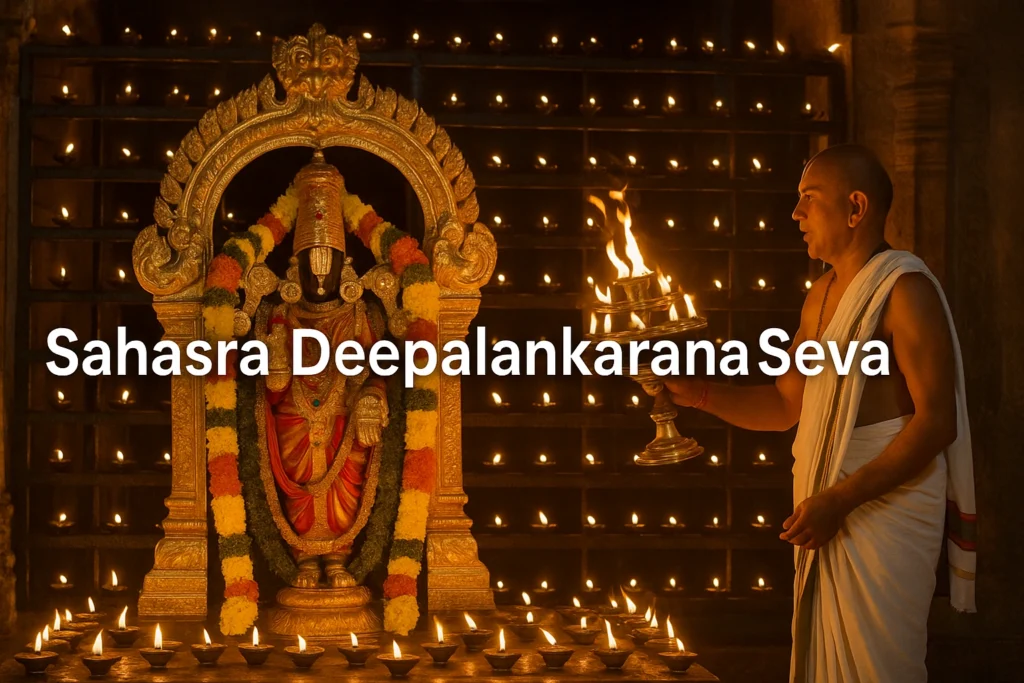
The evening air filled with the melodious chanting of Annamacharya sankirtanas, the gentle swaying of Lord Malayappa on the ornate swing, and the mesmerizing glow of a thousand oil lamps creates an atmosphere so divine that it feels like stepping into the celestial abode of Lord Venkateswara himself. This daily spectacle has captivated millions of devotees and continues to be a beacon of hope and spiritual awakening for all who witness it.
Understanding the Sacred Essence of Sahasra Deepalankarana Seva
The Sahasra Deepalankarana Seva is fundamentally a celebration of divine light triumphing over darkness, both literally and metaphorically. This ancient ritual represents the eternal victory of knowledge over ignorance, hope over despair, and divine grace over worldly suffering. The ceremony involves the lighting of exactly 1,008 oil lamps (though commonly referred to as 1,000) arranged meticulously around the Unjal Mandapam in the southeastern corner of the main temple complex.
Historical and Spiritual Significance
The origins of this sacred practice can be traced back centuries to the ancient Agama Shastra traditions that govern temple worship. The Sahasra Deepalankarana Seva embodies several profound spiritual concepts:
Divine Illumination: Each lamp represents a soul’s journey from darkness to enlightenment Cosmic Harmony: The arrangement of lamps mirrors celestial patterns and cosmic order Devotional Union: The collective lighting symbolizes unified devotion of countless devotees Moksha Pathway: The ritual serves as a symbolic representation of the path to liberation
The ceremony particularly resonates with the Vedantic concept of “Tamaso Ma Jyotirgamaya” (Lead me from darkness to light), making it one of the most spiritually significant daily observances at Tirumala.
Detailed Description of the Ceremony
The Sacred Venue: Unjal Mandapam
The Sahasra Deepalankarana Seva takes place in the beautifully constructed Unjal Mandapam, located in the southeastern corner of the Srivari Temple complex. This architectural marvel, with its intricate carvings and sacred geometry, provides the perfect setting for this divine spectacle. The mandapam features a specially designed swing (unjal) made of precious metals, where the divine deities are seated during the ceremony.
Pre-Ceremony Preparations
The preparation for the Sahasra Deepalankarana Seva begins hours before the actual ceremony. Temple priests meticulously arrange 1,008 traditional oil lamps in specific geometric patterns around the mandapam. These lamps, filled with pure ghee or sesame oil, are positioned according to ancient Agamic principles that ensure maximum spiritual efficacy of the ritual.
The mandapam is decorated with fresh flowers, primarily marigolds and jasmine, creating fragrant garlands that enhance the spiritual atmosphere. Special rangoli patterns (decorative designs) are drawn on the floor using natural colors, representing various aspects of divine energy and cosmic harmony.
The Divine Procession
The ceremony officially commences at 5:30 PM sharp with the grand procession of Sri Malayappa Swamy along with his divine consorts Sridevi and Bhudevi. These are the processional deities (utsava murtis) that represent the main deity for all external ceremonies.
| Deity | Significance | Position |
|---|---|---|
| Malayappa Swamy | Main processional deity of Lord Venkateswara | Center |
| Sridevi | Goddess of wealth and prosperity | Right side |
| Bhudevi | Goddess of earth and abundance | Left side |
The deities are carried in a beautifully decorated golden palanquin from the main sanctum to the Unjal Mandapam. The procession is accompanied by the rhythmic chanting of Vedic hymns and the playing of traditional musical instruments including nadaswaram and thavil.
The Sacred Swing Ceremony
Once the deities reach the Unjal Mandapam, they are carefully placed on the ornate swing. The Sri Malayappa Swamy idol is positioned in the center, flanked by his consorts. The swing, crafted from precious metals and adorned with intricate designs, gently rocks back and forth as priests offer prayers and perform arati.
Lighting the Thousand Lamps
The most visually stunning moment of the Sahasra Deepalankarana Seva occurs when all 1,008 lamps are lit simultaneously. This creates a breathtaking spectacle as the entire mandapam is bathed in warm, golden light. The sight of the divine deities illuminated by hundreds of flickering flames while seated on the gently swaying swing is truly mesmerizing.
The lighting follows a specific sequence:
- Central lamps around the swing are lit first
- Concentric circles of lamps are illuminated progressively outward
- Perimeter lamps complete the sacred geometric pattern
- Final dedication lamps are lit while chanting specific mantras
Musical and Devotional Offerings
Throughout the ceremony, trained musicians and priests perform soul-stirring renditions of Annamacharya sankirtanas. These compositions, created by the 15th-century saint-composer Annamacharya, are specifically dedicated to Lord Venkateswara and capture the essence of divine love and devotion.
The musical program typically includes:
- Venkatesa Suprabhatam – Morning hymns
- Venkatesa Stotram – Devotional verses
- Annamacharya Keertanas – Sacred compositions
- Divya Prabandham – Tamil devotional literature
Concluding Rituals
The Sahasra Deepalankarana Seva concludes with the Purna Kumbha Arati, where priests offer camphor flames to the deities while devotees witness the divine darshan. Following this, the deities are taken on a pradakshina (circumambulation) around the four streets surrounding the temple before being returned to the main sanctum.
Complete Guide to Attending Sahasra Deepalankarana Seva
Timing and Schedule
The Sahasra Deepalankarana Seva follows a strict daily schedule that devotees must be aware of for proper planning:
| Time | Activity |
|---|---|
| 4:30 PM | Devotee reporting time at Supadham |
| 5:00 PM | Final entry for ticket holders |
| 5:30 PM | Ceremony commencement |
| 6:00 PM | Main lighting of lamps |
| 6:30 PM | Conclusion and pradakshina |
| 7:00 PM | Darshan through Supadham entrance |
Important Note: The ceremony is performed daily without fail, except during major temple festivals when timings may be slightly adjusted.
Ticket Booking Process
Securing tickets for the Sahasra Deepalankarana Seva requires advance planning and understanding of the TTD online booking system. Here’s a comprehensive guide:
Online Booking Procedure
Step 1: Website Access Visit the official TTD portal at https://ttdevasthanams.ap.gov.in/
Step 2: Registration/Login
- Use your registered mobile number
- Complete OTP verification
- First-time users must complete full registration
Step 3: Service Selection
- Click on “Online Services” in the main menu
- Navigate to “Sevas” section
- Select “Srivari Temple, Tirumala”
- Choose “Sahasra Deepalankarana Seva”
Step 4: Date and Availability Check
- Booking opens up to 4 months in advance
- Green color indicates availability
- Red color indicates fully booked slots
- Blue color indicates quota not yet released
Step 5: Personal Details
- Enter participant names exactly as per ID proof
- Provide age, gender for each participant
- Upload required ID proof documents
- Maximum 2 tickets per login allowed
Step 6: Payment
- Current ticket price: ₹300 per person (prices may vary)
- Payment options: Credit/Debit card, Net Banking, UPI
- Transaction fee additional
- Instant confirmation upon successful payment
Alternative Booking Methods
Central Reception Office (CRO) Booking:
- Limited daily quota (approximately 180-300 tickets)
- Counter location: Near Tirumala bus stand
- Timing: Opens early morning
- Requirements: Original ID proof, cash payment
- Recommendation: Arrive very early due to limited availability
Recommendation Letters:
- Available through MLAs, MPs, government officials
- Submit to EO/JEO office before 4:00 PM on ceremony day
- Route through MBC 24 queue line
- Original ID proof mandatory
Eligibility and Restrictions
| Category | Details |
|---|---|
| Age Limit | Children below 12 years: Free entry (no ticket required) |
| Booking Limit | Maximum 2 tickets per registered login |
| Advance Booking | Minimum 3 days, Maximum 120 days |
| Cooling Period | 3 months gap between TTD visits |
| ID Requirements | Original government-issued photo ID mandatory |
Dress Code Requirements
The Sahasra Deepalankarana Seva has strict dress code requirements that are rigorously enforced at entry points. Devotees must adhere to traditional attire to maintain the sanctity of the ceremony.
For Men:
- Traditional Option 1: White dhoti with shirt or uttariya
- Traditional Option 2: Kurta with pajama or matching pants
- Fabric: Cotton or silk preferred
- Color: White, cream, or light colors recommended
- Prohibited: Shorts, T-shirts, Western trousers, sleeveless shirts
For Women:
- Traditional Option 1: Saree with blouse
- Traditional Option 2: Salwar kameez with dupatta
- Traditional Option 3: Half-saree with blouse
- Traditional Option 4: Lehenga with dupatta
- Prohibited: Western dresses, skirts, sleeveless tops, revealing clothing
Special Considerations:
- Footwear must be removed before entering mandapam premises
- Head covering recommended for women during ceremony
- Modest and conservative attire essential
- Traditional Indian clothing always preferred for temple visits
Travel and Logistics
Reaching Tirumala
By Road:
- Private vehicles allowed with advance parking reservations
- Regular bus services from Tirupati (30-45 minutes)
- Taxi services available (book in advance)
- Ghat Road: Two routes – Alipiri (main) and Srivari Mettu
By Air:
- Nearest airport: Tirupati Airport (Renigunta) – 20 km from Tirupati
- Chennai Airport: 3.5 hours by road
- Bangalore Airport: 4 hours by road
By Train:
- Tirupati Railway Station: Main railhead
- Regular trains from major Indian cities
- From station: Bus/taxi to Tirumala (1 hour)
Accommodation Options
TTD Guest Houses:
- Book through same TTD portal
- Range: ₹500 – ₹3,000 per day
- Include: Nandakam, Madhavam, Bhudevi complex
Private Accommodations:
- Hotels in Tirupati town
- Dharamshalas and lodges
- Advance booking essential during peak seasons
What to Expect During the Ceremony
Arrival and Entry Process
Upon reaching the temple complex, devotees with Sahasra Deepalankarana Seva tickets must report to the Supadham entrance by 4:30 PM. The entry process involves:
- Security Check: Thorough screening for prohibited items
- Dress Code Verification: Strict checking of traditional attire
- Ticket Validation: Original ID verification against booking details
- Prasadam Distribution: Each devotee receives sacred offering
- Seating Arrangement: Organized seating around the mandapam
During the Ceremony
The actual Sahasra Deepalankarana Seva experience is deeply moving and spiritually uplifting. Devotees are seated in designated areas with clear views of the divine proceedings. The atmosphere becomes increasingly devotional as:
- Vedic chants fill the air with sacred vibrations
- Lamp lighting creates a progressively brighter divine ambiance
- Musical performances enhance the spiritual experience
- Divine darshan provides blessed viewing of the illuminated deities
- Collective devotion creates a powerful sense of unity and faith
Post-Ceremony Benefits
After the completion of the Sahasra Deepalankarana Seva, participants receive several benefits:
Prasadam Distribution:
- Two sacred laddus per person
- Blessed vibhuti (sacred ash)
- Tulasi leaves from the ceremony
Special Darshan:
- Priority entry through Supadham gate
- Reduced waiting time (30-45 minutes typically)
- Closer view of main deity
- Less crowded darshan experience
Spiritual Benefits and Significance
Religious and Philosophical Dimensions
Participating in the Sahasra Deepalankarana Seva is believed to confer numerous spiritual benefits according to Hindu scriptures and temple traditions:
Karmic Purification
The act of witnessing the thousand lamps being lit is said to burn away negative karma accumulated over lifetimes. Each flame represents divine grace working to purify the devotee’s spiritual path.
Divine Blessings
Regular attendance at this seva is believed to invoke the special blessings of Lord Venkateswara for:
- Material prosperity and financial stability
- Family harmony and relationship healing
- Health and longevity for self and loved ones
- Educational success for children
- Spiritual growth and wisdom
Moksha Preparation
The ceremony serves as preparation for the ultimate spiritual goal of moksha (liberation) by:
- Cultivating detachment from material desires
- Developing deep devotion (bhakti)
- Understanding the temporary nature of worldly pleasures
- Experiencing unity with the divine
Psychological and Emotional Benefits
From a psychological perspective, the Sahasra Deepalankarana Seva offers profound emotional healing:
Stress Relief: The meditative atmosphere and rhythmic chanting induce deep relaxation Hope Restoration: The symbolism of light conquering darkness provides emotional upliftment Community Connection: Shared devotional experience creates sense of belonging Perspective Gain: Witnessing divine grandeur puts personal problems in perspective
Personal Reflections and Experiences
Having attended the Sahasra Deepalankarana Seva numerous times over the years, I can share some deeply personal insights that may help first-time attendees prepare for this transformative experience.
My First Experience
I still vividly remember my first Sahasra Deepalankarana Seva in 2008. As a somewhat skeptical young professional, I accompanied my grandmother who insisted on this particular seva. The moment those thousand lamps were lit simultaneously, I felt something shift within me. The combination of the divine music, the gentle swaying of the deities, and the warm glow of countless flames created an atmosphere so charged with spiritual energy that it was impossible to remain unmoved.
The Transformation Journey
Over the years, each subsequent visit to the Sahasra Deepalankarana Seva has deepened my understanding of its significance. I’ve observed how the ceremony affects different people in unique ways:
Families find healing: I’ve witnessed estranged family members reconciling during the seva Students gain clarity: Young people often report improved focus and direction after attending Elderly find peace: Senior devotees experience deep contentment and acceptance Professionals discover balance: Business people often gain perspective on work-life priorities
Practical Observations
Through multiple visits, I’ve learned several practical tips that enhance the experience:
Arrive early: The pre-ceremony atmosphere is equally beautiful and less crowded Stay hydrated: Carry water bottles as the ceremony can be lengthy Wear comfortable clothing: Despite dress code requirements, prioritize comfort Practice meditation: Basic meditation skills enhance the spiritual experience Remain present: Avoid photographing and focus on direct experience
Tips for First-Time Attendees
Pre-Visit Preparation
Spiritual Preparation:
- Read about Lord Venkateswara’s significance
- Practice basic meditation or prayer
- Maintain vegetarian diet before visit
- Cultivate devotional mindset
Practical Preparation:
- Book tickets well in advance
- Arrange appropriate clothing
- Plan accommodation early
- Prepare for potential crowds
During the Visit
Mindset Recommendations:
- Approach with reverence and humility
- Be patient with procedures and crowds
- Focus on internal experience over external observations
- Practice gratitude throughout
Behavioral Guidelines:
- Maintain silence during ceremony
- Follow all instructions from temple staff
- Respect other devotees’ space
- Avoid rushing or pushing
Common Challenges and Solutions
Challenge: Language Barriers
Solution: Basic Telugu phrases helpful; staff usually multilingual
Challenge: Crowd Management
Solution: Follow designated routes; remain calm and patient
Challenge: Physical Comfort
Solution: Wear comfortable footwear for walking; bring small cushion if permitted
Challenge: Spiritual Overwhelm
Solution: Take breaks if needed; focus on breathing; trust the process
Comparative Analysis with Other Temple Rituals
The Sahasra Deepalankarana Seva holds a unique position among Tirumala’s daily rituals. Here’s how it compares with other significant ceremonies:
Daily Sevas Comparison
| Seva | Timing | Duration | Location | Unique Feature |
|---|---|---|---|---|
| Suprabhatam | 3:00 AM | 90 minutes | Main sanctum | Morning awakening |
| Thomala Seva | 4:30 AM | 3 hours | Inner sanctum | Flower decoration |
| Sahasra Deepalankarana | 5:30 PM | 1 hour | Unjal Mandapam | Thousand lamps |
| Ekanta Seva | 11:00 PM | 1 hour | Private chamber | Night rest ritual |
Accessibility and Inclusivity
Unlike many other sevas that occur within the restricted inner sanctum, the Sahasra Deepalankarana Seva takes place in a more accessible location, making it:
- Visible to more devotees simultaneously
- Less intimidating for first-time visitors
- More comfortable for elderly and disabled devotees
- Family-friendly with accommodation for children
Seasonal Variations and Special Occasions
Regular vs. Festival Times
During normal days, the Sahasra Deepalankarana Seva follows the standard format. However, during major festivals, the ceremony may be enhanced with:
Additional Decorations:
- Extra floral arrangements
- Special rangoli patterns
- Enhanced lighting effects
- Traditional art installations
Extended Musical Programs:
- Longer duration performances
- Guest musicians and dancers
- Classical music concerts
- Special Annamacharya compositions
Increased Devotee Participation:
- Cultural programs by visiting groups
- Community singing sessions
- Special prasadam distributions
- Extended darshan opportunities
Annual Calendar Highlights
| Festival Period | Special Features |
|---|---|
| Brahmotsavam | Grand decorations, celebrity performances |
| Vaikunta Ekadasi | Extended seva duration, special offerings |
| Sri Rama Navami | Themed decorations, additional ceremonies |
| Ugadi | New Year celebrations, prosperity prayers |
Environmental and Cultural Impact
Eco-Friendly Practices
The temple administration has implemented several environmentally conscious practices for the Sahasra Deepalankarana Seva:
Sustainable Materials:
- Use of traditional clay lamps when possible
- Biodegradable decorations
- Organic oil sources
- Natural flower arrangements
Waste Management:
- Systematic collection of used materials
- Composting of organic waste
- Recycling of metal components
- Minimal plastic usage
Cultural Preservation
The Sahasra Deepalankarana Seva serves as an important vehicle for preserving and promoting traditional Indian culture:
Musical Heritage: Regular performance of classical compositions maintains ancient musical traditions Artistic Skills: Continued demand for traditional crafts supports local artisans Language Preservation: Sanskrit and Telugu chanting keeps ancient languages alive Ritual Knowledge: Transmission of ceremonial procedures to younger generations
Economic and Social Dimensions
Economic Impact
The Sahasra Deepalankarana Seva contributes significantly to the local economy:
Direct Revenue:
- Ticket sales revenue
- Accommodation bookings
- Transportation services
- Food and beverage sales
Employment Generation:
- Priest positions
- Support staff jobs
- Tourism-related employment
- Artistic and craft work
Social Benefits
Community Building: The shared experience of attending the seva creates bonds between people from diverse backgrounds, fostering:
- Inter-community harmony
- Cultural exchange
- Spiritual networking
- Charitable activities
Educational Value: Many families use the Sahasra Deepalankarana Seva as an educational opportunity to teach children about:
- Religious traditions
- Cultural values
- Spiritual practices
- Historical significance
Safety and Security Measures
Crowd Management
Given the popularity of the Sahasra Deepalankarana Seva, extensive safety measures are in place:
Entry Control:
- Ticket verification systems
- Regulated entry timing
- Capacity limitations
- Queue management
Emergency Preparedness:
- Medical aid stations
- Fire safety equipment
- Evacuation procedures
- Communication systems
Health and Hygiene
Particularly important in post-pandemic times:
Sanitization Protocols:
- Regular cleaning of seating areas
- Hand sanitizer availability
- Mask recommendations
- Social distancing when possible
Health Monitoring:
- Temperature checking facilities
- Basic medical assistance
- Emergency response teams
- Coordination with local hospitals
The Eternal Light of Devotion
The Sahasra Deepalankarana Seva represents far more than a mere ritual or tourist attraction. It embodies the eternal human quest for divine connection, spiritual enlightenment, and inner peace. As I reflect on my many experiences attending this sacred ceremony, I’m struck by its power to transform ordinary evenings into profound spiritual journeys.
For those planning to attend, remember that the Sahasra Deepalankarana Seva is not just about witnessing a beautiful ceremony—it’s about opening your heart to receive divine grace. The thousand lamps that illuminate the mandapam are external reflections of the inner light that exists within each devotee. When we participate with genuine devotion and reverence, we kindle our own spiritual flames that continue to burn long after the ceremony ends.
The practical aspects—booking tickets, following dress codes, managing logistics—are merely the external framework that enables the true experience. The real seva happens in the moments of silent communion with the divine, when the boundary between devotee and deity dissolves in the warm glow of sacred light.
As you plan your visit to witness the Sahasra Deepalankarana Seva, approach it not just as religious tourism but as a pilgrimage of the heart. Allow yourself to be touched by the ancient wisdom embedded in this daily celebration of light, love, and divine grace. In a world often dominated by darkness and uncertainty, this daily ritual stands as a beacon of hope, reminding us that divine light is always available to those who seek it with sincere hearts.
The Sahasra Deepalankarana Seva continues daily, maintaining an unbroken tradition that connects our modern lives with timeless spiritual truths. Each evening, as those thousand lamps are lit anew, they carry forward the prayers, hopes, and devotions of millions who have witnessed this sacred ceremony over the centuries. By participating, you become part of this eternal chain of light-bearers, carrying forward the flame of devotion for future generations to witness and experience.
May the divine light of the Sahasra Deepalankarana Seva illuminate your path and fill your life with peace, prosperity, and spiritual fulfillment.
Author Bio: Smt. Rajeshwari Balaji is a dedicated traveler and Tirumala devotee with over 20 years of experience in organizing pilgrimages for families. Known for her practical advice and heartfelt narratives, she specializes in guiding first-time visitors through their spiritual journey. Her articles focus on everything from booking darshan tickets to finding comfortable accommodations and experiencing the sanctity of Tirumala. With personal anecdotes and detailed guides, she ensures readers have a smooth and fulfilling pilgrimage experience. Email: rajeshwari.b@vidzone.in