

Witness the divine Ratha Saptami at Tirumala 2025 – experience seven vahana sevas, sunrise rituals, and Sun God blessings. Complete guide to Surya Jayanti celebrations.
The first rays of dawn painted the sky in shades of crimson and gold as I stood among thousands of devotees on the northwestern platform of Tirumala temple. It was February 2018, and I was experiencing my first Ratha Saptami at Tirumala. The moment Lord Venkateswara appeared on the magnificent Suryaprabha Vahanam, drawn by seven golden horses, the rising sun seemed to bow before the deity. That sacred sight, where heaven and earth converged in worship, left me speechless. Since that day, I’ve returned to Tirumala for Ratha Saptami six times, and each experience deepens my understanding of this extraordinary festival.

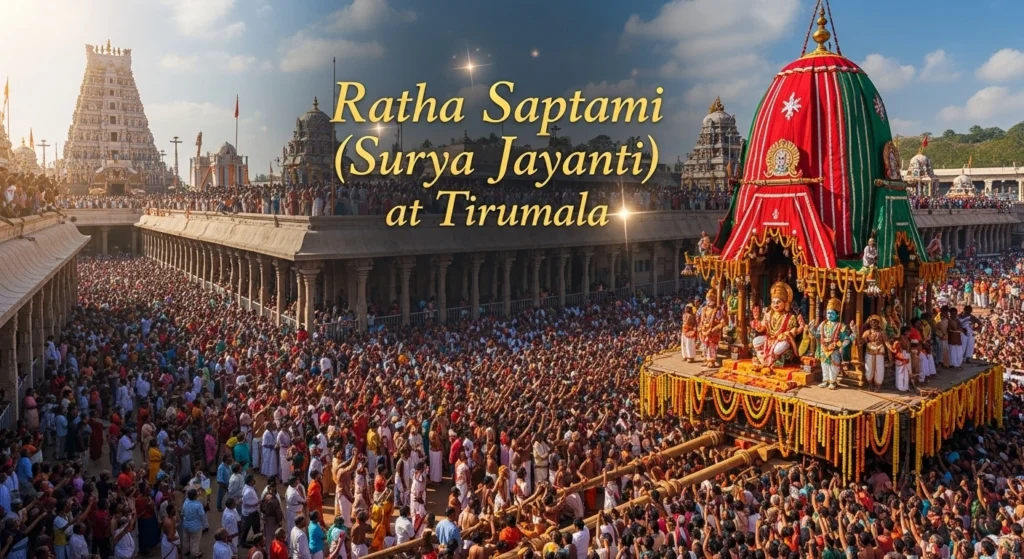
Ratha Saptami, also known as Surya Jayanti or Mini-Brahmotsavam, celebrates the birth of Lord Surya, the Sun God. This auspicious day falls on the seventh day (Saptami) of the bright fortnight (Shukla Paksha) in the Hindu month of Magha, typically occurring in late January or early February. In 2025, devotees will celebrate Ratha Saptami on Tuesday, February 4, when Lord Venkateswara graces seven different vahanas (celestial vehicles) from sunrise to sunset in one of Tirumala’s most spectacular festivals.
The Divine Significance of Ratha Saptami
According to Hindu mythology, Ratha Saptami marks the day Lord Surya began illuminating the universe. Born to the sage Kashyapa and his wife Aditi, Surya represents the life-giving energy that sustains all creation. The Rig Veda describes Surya’s chariot drawn by seven horses, each representing a day of the week and the seven colors of light’s spectrum.
The festival’s name derives from “Ratha” (chariot) and “Saptami” (seventh day). On this day, Surya turns his celestial chariot from the southeast toward the northeast, symbolizing the sun’s northward journey (Uttarayana) and heralding the arrival of spring and the harvest season. For farmers across South India, Ratha Saptami represents an auspicious new beginning.
What makes this celebration profound is its dual significance. While Hindus worldwide worship Surya on this day, at Tirumala, the festival takes on additional meaning. Lord Venkateswara, considered an incarnation of Vishnu, manifests as Surya Narayana, embodying both Vishnu and the Sun God. This unique theological connection transforms the Tirumala celebration into something extraordinary.
Why “Mini-Brahmotsavam”? The Seven Vahana Sevas
During the annual nine-day Brahmotsavam festival at Tirumala, Lord Venkateswara graces only two vahanas per day. But on Ratha Saptami, devotees receive the rare blessing of witnessing the Lord on seven different vahanas in a single day – from sunrise to sunset. This unprecedented opportunity explains why Ratha Saptami is reverently called “Mini-Brahmotsavam.”
The Tirumala Tirupati Devasthanams (TTD) has celebrated this festival since 1565, according to temple records. Each vahana carries deep symbolic meaning, and watching all seven processions brings immense spiritual merit. I remember my third Ratha Saptami when an elderly priest explained, “Those who witness all seven vahana sevas on this day will never be troubled by Surya Graha dosha or other planetary afflictions.”
The Seven Sacred Vahanas: A Complete Schedule
The 2025 Ratha Saptami schedule at Tirumala follows this divine timeline:
1. Suryaprabha Vahanam (5:30 AM – 8:00 AM) The most significant vahana of the day begins in pre-dawn darkness. The processional deity arrives at the specially prepared northwestern platform just as the first light appears on the horizon. Seated on the golden Suryaprabha Vahanam drawn by seven magnificent horses, Lord Venkateswara receives the sun’s direct rays from feet to crown. This breathtaking moment, when the rising sun appears to worship the Lord of Seven Hills, represents the festival’s pinnacle.
During my first Ratha Saptami, I reached this spot by 4:30 AM to secure a viewing position. The wait proved worthwhile when sunrise occurred at 6:44 AM, bathing the deity in crimson light while priests offered fruits on gold plates and performed camphor aarti. The belief holds that witnessing this specific moment grants freedom from all Navagraha doshas.
2. Chinna Sesha Vahanam (9:00 AM – 10:00 AM) Following the sunrise ceremony, Lord Venkateswara appears on the Chinna Sesha Vahanam, seated upon the divine serpent Adisesha with five hoods. This vahana symbolizes protection and cosmic stability.
3. Garuda Vahanam (11:00 AM – 12:00 PM) The Lord rides his celestial vehicle Garuda, the divine eagle. This represents swiftness in answering devotees’ prayers and the removal of obstacles.
4. Hanumantha Vahanam (1:00 PM – 2:00 PM) Lord Venkateswara appears on the shoulders of Hanuman, symbolizing devotion, strength, and unwavering service to the divine.
5. Chakra Snanam (2:00 PM – 3:00 PM) A unique ritual occurs mid-afternoon when the Sudarshana Chakra (Lord Vishnu’s divine discus) receives ceremonial bathing. Unlike regular Chakra Snanam during other festivals, this ceremony happens in Ekantam (privacy) within the temple premises, typically at Ranganayakula Mandapam.
6. Kalpavriksha Vahanam (4:00 PM – 5:00 PM) The Lord appears beneath the celestial wish-fulfilling tree, representing abundance and the granting of devotees’ righteous desires.
7. Sarvabhoopala Vahanam (6:00 PM – 7:00 PM) As evening approaches, the deity rides the magnificent elephant vahana, symbolizing royal authority and divine sovereignty.
8. Chandraprabha Vahanam (8:00 PM – 9:00 PM) The final procession occurs under moonlight, with Lord Venkateswara seated on the moon vahana, bringing the day-long celebration to a serene conclusion.
Each vahana procession winds through the four Mada streets surrounding the temple, with thousands of devotees lining the galleries to receive darshan and blessings.
The Mythological Foundations: Stories That Inspire Faith
Beyond the Vedic origins, several puranic legends explain Ratha Saptami’s importance. The most famous story comes from the ancient Kamboja kingdom, ruled by the righteous King Yashovarma. Despite his virtue, the king remained childless for many years. His fervent prayers were eventually answered when a son was born, but joy turned to anguish as the prince suffered from terminal illness.
Desperate for a solution, the king consulted learned sages who examined the prince’s horoscope. They discovered that in his previous birth, the prince had been extremely wealthy but never performed charitable acts. Only at life’s end did he witness someone performing Ratha Saptami puja. This brief exposure to the sacred ritual granted him rebirth as a prince but carried forward the health afflictions from past karma.
The sages prescribed a remedy: perform Ratha Saptami worship with complete devotion to Lord Surya. King Yashovarma meticulously observed all rituals – the pre-dawn bath, the offerings, the prayers. His son’s health miraculously restored, and he went on to rule the kingdom with wisdom and compassion. This legend reinforces the belief that Ratha Saptami worship can heal illnesses and remove karmic burdens.
Another significant connection comes from the Ramayana. When Lord Rama struggled to defeat Ravana, sage Agastya taught him the Aditya Hridayam (Hymn to the Heart of the Sun). This powerful stotra granted Rama the energy and courage needed for victory. The Aditya Hridayam remains one of the most important prayers recited on Ratha Saptami.
The Sacred Rituals: How to Observe Ratha Saptami
Proper observation of Ratha Saptami involves several traditional practices. Having participated in these rituals both at home and at Tirumala, I can attest to their spiritual potency.
The Pre-Dawn Bath (Arunodaya Snan)
The most important ritual occurs before sunrise during Arunodaya (the time when darkness transitions to dawn). For 2025, the Snan Muhurat falls between 5:33 AM and 7:09 AM on February 4. Devotees traditionally bathe using Arka leaves (Calotropis Gigantea), placing seven leaves – one on the head, two on shoulders, two on knees, and two on feet.
This ritualistic bath carries profound meaning. Arka leaves symbolize the sun’s rays and his chariot. The practice is believed to cure all ailments, earning Ratha Saptami the alternative name “Arogya Saptami” (Festival of Health). In Tamil Nadu, devotees use Erukku leaves for this sacred bath.
I remember my first attempt at this ritual in 2018. Finding fresh Arka leaves in Tirumala proved challenging, but local vendors near the temple sold them specifically for Ratha Saptami. The pre-dawn bath in the chilly February morning initially seemed daunting, but the spiritual energy made physical discomfort irrelevant.
Arghyadan: Offering Water to Surya
Following the bath, devotees offer Arghya (water offering) to the rising sun at approximately 7:05 AM. Standing in Namaskar mudra facing east, water is offered from a kalash (brass vessel) while chanting:
“Om Saptami! Sarva Lokanam Janani! Suryanarayana Janani! Tubhyam Namah”
This mantra honors Saptami as the mother of all worlds and the mother of Lord Surya Narayana. The offering should be repeated twelve times while reciting different names of Surya.
Home Rituals and Offerings
In South Indian homes, women create beautiful rangolis (colored rice powder designs) depicting Surya’s chariot with seven horses. A traditional practice involves boiling milk in earthen pots facing the sun. This blessed milk then prepares Paramannam (sweet rice pudding) or pongal, offered as bhog to Surya.
The scientific wisdom behind these practices fascinates me. Using broad beans, ragi, and Arka leaves on Ratha Saptami has specific health benefits. These ingredients, combined with sunlight exposure during proper muhurat times, align with Ayurvedic principles for enhancing vitality and immunity.
Essential Mantras and Stotras
Several powerful hymns are recited on Ratha Saptami:
- Gayatri Mantra: The universal solar prayer
- Surya Ashtakam: Eight verses glorifying Surya
- Surya Sahasranama: The thousand names of the Sun God
- Aditya Hridayam: The heart of Surya’s essence
Continuous chanting of these mantras throughout the day amplifies spiritual benefits. During my visits to Tirumala, I’ve heard these sacred verses echoing through the Mada streets as processions pass, creating an atmosphere of intense devotion.
Planning Your Ratha Saptami Pilgrimage to Tirumala
Having guided numerous families through their Ratha Saptami experiences at Tirumala, I’ve learned what works and what doesn’t. Proper planning transforms a potentially chaotic visit into a spiritually fulfilling journey.
Accommodation and Booking
Book accommodation at least two months before February 4, 2025. The TTD accommodation portal opens bookings 120 days in advance. All TTD guesthouses fill rapidly for Ratha Saptami. Consider staying in Tirupati if Tirumala accommodation is unavailable – regular buses operate throughout the day and night.
Darshan Arrangements
On Ratha Saptami, the TTD cancels several regular sevas to accommodate the massive devotee influx:
Cancelled Services:
- Ashtadala Pada Padmaradhana
- Kalyanotsavam
- Oonjal Seva
- Arjitha Brahmotsavam
- Sahasra Deepalankara Seva
- All privilege darshans (NRI, senior citizens, parents with infants, differently-abled)
- VIP break darshans (except protocol dignitaries)
Available Darshan:
- Regular Sarva Darshan (free)
- Special Entry Darshan (SED) at Rs. 300 per person (limited slots)
Book Special Entry Darshan tickets online through the TTD website to reduce waiting times. Without SED tickets, expect Sarva Darshan wait times of 10-15 hours on Ratha Saptami day. The crowds rival those of major Brahmotsavam days.
Viewing the Vahana Sevas
Devotees with gallery tickets can sit in the Mada street galleries to watch all seven vahana processions. The TTD issues these tokens separately. Arriving by 5:00 AM secures good viewing spots for the crucial Suryaprabha Vahanam.
I learned through experience that strategic positioning matters. The northwestern corner near the Suryaprabha platform offers the best view of the sunrise ceremony. For the subsequent vahana processions, positions along the northern and eastern Mada streets provide comfortable viewing with better exits.
What to Carry and What to Avoid
Carry:
- Valid photo identification (mandatory)
- Booking confirmations (printed or digital)
- Traditional clothing (dhoti and shirt for men, saree or salwar kameez for women)
- Small water bottle
- Light snacks for long waits
- Warm clothing (February mornings in Tirumala can be chilly)
Leave Behind:
- Mobile phones (not allowed in main temple)
- Cameras
- Large bags
- Leather items
The TTD provides free cloakroom facilities, but retrieval queues can be lengthy. Minimize what you bring.
Food and Facilities
The TTD arranges free Annaprasadam (food distribution) throughout Ratha Saptami. Expect upma, pongal, coffee, milk, and other prasadam from early morning through evening. Drinking water and restroom facilities are available at regular intervals along the Mada streets and in waiting areas.
Medical teams station themselves at strategic points. During one Ratha Saptami, a fellow pilgrim in our group suffered from dehydration. The TTD medical response was immediate and professional, providing treatment and ensuring complete recovery before allowing her to continue darshan.
The Spiritual Atmosphere: Beyond Physical Experience
What photographs and videos cannot capture is the palpable spiritual energy that permeates Tirumala on Ratha Saptami. The collective devotion of hundreds of thousands of pilgrims creates something extraordinary. I’ve experienced many festivals across India, but few match the intensity of faith I’ve witnessed here.
During my fourth Ratha Saptami visit, I befriended an elderly couple from rural Karnataka who had saved for three years to make this pilgrimage. The husband, a farmer, told me that for his community, Ratha Saptami blessings ensure good harvest and prosperity. Witnessing the Suryaprabha Vahanam with tears streaming down their weathered faces, I understood that for millions of Indians, the Sun God represents not abstract theology but tangible survival – the light and warmth that makes crops grow and life possible.
Another memory that stays with me involves a young software engineer from Bangalore. Diagnosed with a chronic illness affecting his eyesight, he came to Ratha Saptami seeking Surya’s healing blessings. Six months later, he contacted me to share that his vision had significantly improved. Whether medical treatment, divine intervention, or a combination of both healed him, his faith in Surya’s grace remained unshaken.
These personal stories remind me that Ratha Saptami transcends ritual – it represents hope, healing, and humanity’s eternal connection to the cosmic forces that sustain us.
The Temple Decorations and Festivities
The TTD transforms Tirumala into a luminous spectacle for Ratha Saptami. The four Mada streets receive elaborate floral decorations in vibrant colors. Thousands of oil lamps illuminate the evening processions, creating a scene that truly resembles heaven on earth.
Unlike the nine-day Brahmotsavam with its extensive cultural programs, Ratha Saptami focuses primarily on the vahana sevas themselves. However, the temple’s ornamental beauty on this day rivals any major festival. The processional deity receives special alankaram (decoration) for each vahana, with priests spending hours adorning Lord Venkateswara with jewels, silks, and fresh flowers.
The Tirumala temple architecture provides a magnificent backdrop for these processions. The Mada streets, with their pillared mandapams and ancient structures, have witnessed these same rituals for over 450 years. Walking through these sacred spaces during Ratha Saptami, you feel connected to countless generations of devotees who stood in the same spots, witnessed the same vahanas, and sought the same blessings.
Connecting with Hindu Traditions
Ratha Saptami celebrations extend beyond Tirumala across India. The Konark Sun Temple in Odisha, itself designed as Surya’s chariot, hosts significant celebrations. Devotees take holy dips in Chandrabhaga beach at sunrise. In Karnataka, temples at Melkote and Mysore conduct ceremonial processions carrying the Surya Mandala.
However, Tirumala’s celebration remains unparalleled in scale and spiritual significance. The combination of Surya worship with Lord Venkateswara’s divine presence creates a unique synthesis of Hindu tradition. This integration reflects the broader Hindu understanding that all deities represent different aspects of the same ultimate reality.
For those interested in exploring more about Hindu pilgrimage traditions and their cultural significance, understanding Ratha Saptami provides valuable insights into Vedic solar worship and its continued relevance in contemporary spiritual life.
Frequently Asked Questions About Ratha Saptami at Tirumala
What is the date of Ratha Saptami 2025 at Tirumala?
Ratha Saptami 2025 falls on Tuesday, February 4. The Saptami Tithi begins at 4:37 AM on February 4 and ends at 2:31 AM on February 5. The sacred bath (Snan Muhurat) timing is from 5:33 AM to 7:09 AM, and Arghyadan should be offered around 7:05 AM during sunrise.
How long does it take to witness all seven vahana sevas?
The vahana sevas begin at 5:30 AM with Suryaprabha Vahanam and conclude around 9:00 PM with Chandraprabha Vahanam. If you secure gallery seating, you can comfortably witness all seven processions over the entire day. However, most devotees focus on the crucial morning Suryaprabha Vahanam seva and select additional vahanas based on their schedule and interest.
Can I get special darshan tickets for Ratha Saptami?
Special Entry Darshan (SED) tickets at Rs. 300 are available online through the official TTD website, subject to availability. However, all privilege darshans including senior citizen, NRI, infant, and differently-abled categories are cancelled on Ratha Saptami due to anticipated heavy crowds. Book SED tickets as early as possible when booking opens.
Is the Suryaprabha Vahanam visible to everyone or only ticket holders?
The sunrise ceremony with Suryaprabha Vahanam occurs on a specially constructed platform near the northwestern corner of the temple. While gallery ticket holders get reserved seating with clear views, thousands of devotees without tickets also gather in surrounding areas to witness this sacred moment. Arriving by 4:30-5:00 AM improves your chances of finding a vantage point even without gallery tickets.
What is the significance of witnessing all seven vahanas on one day?
Hindu tradition holds that devotees who witness all seven vahana sevas on Ratha Saptami receive complete protection from Surya Graha dosha and all nine planetary afflictions (Navagraha doshas). The unique opportunity to see Lord Venkateswara on seven different vahanas in one day – something that doesn’t occur even during the annual Brahmotsavam – makes Ratha Saptami spiritually powerful.
Are there any health benefits associated with Ratha Saptami rituals?
Yes, Ratha Saptami is also called “Arogya Saptami” (Festival of Health). Taking the pre-dawn bath using Arka leaves during Arunodaya is believed to cure ailments and promote overall wellness. The combination of early morning sunlight exposure, use of medicinal Arka leaves, and consumption of traditional preparations like Paramannam aligns with Ayurvedic principles for enhanced vitality and immunity.
How crowded is Tirumala on Ratha Saptami compared to regular days?
Ratha Saptami witnesses crowd levels similar to major Brahmotsavam days, with 80,000-100,000 devotees expected. The TTD deploys extensive security and crowd management measures. Wait times for regular darshan can extend to 10-15 hours. Special Entry Darshan reduces this significantly. Despite crowds, the organized TTD management ensures relatively smooth movement, especially during vahana processions.
Can I perform Ratha Saptami rituals at home if I cannot visit Tirumala?
Absolutely. Many devotees observe Ratha Saptami at home by taking the Arunodaya bath with Arka leaves, offering Arghyadan to the rising sun, preparing traditional Paramannam, and reciting Surya Ashtakam, Aditya Hridayam, and Gayatri Mantra. While visiting Tirumala adds the blessing of Lord Venkateswara’s physical darshan, sincere home worship is equally meritorious according to Hindu scriptures.
Final Thoughts: A Journey Worth Undertaking
Seven years after my first Ratha Saptami at Tirumala, I still marvel at how this festival combines cosmic grandeur with intimate devotion. The sight of thousands united in worship, the splendor of seven vahana processions, the sacred synchronicity of sunrise and divine darshan – these experiences remain etched in my spiritual memory.
Planning your Ratha Saptami pilgrimage requires attention to practical details: book accommodation early, secure darshan tickets in advance, arrive prepared for crowds and long hours, carry appropriate clothing and minimal luggage, and most importantly, approach with patient devotion.
The spiritual rewards far exceed the physical challenges. Witnessing Lord Venkateswara on Suryaprabha Vahanam as the sun rises, feeling the collective energy of lakhs of devotees, experiencing the entire spectrum of vahana sevas from dawn to dusk – these moments transcend ordinary pilgrimage and become transformative spiritual milestones.
Whether you seek healing from planetary afflictions, wish to connect with ancient Vedic solar traditions, desire the unique darshan of seven vahanas in one day, or simply want to experience one of Tirumala’s most spectacular festivals, Ratha Saptami offers something profound to every sincere seeker.
As you plan your February 4, 2025 journey to Tirumala, remember that you’re participating in a tradition maintained for over 450 years – a living link to our spiritual heritage. May Lord Venkateswara as Surya Narayana bless your pilgrimage with health, prosperity, and divine illumination.
For more detailed information about planning your visit, exploring Tirumala temple timings, and understanding various festivals, visit vidzone.in, your comprehensive guide to the sacred hills.
Om Namo Venkatesaya! Arogyam Bhaskarad Icchet! (We seek health from the Sun God!)
About the Author
Smt. Rajeshwari Balaji is a dedicated traveler and Tirumala devotee with over 20 years of experience in organizing pilgrimages for families. Known for her practical advice and heartfelt narratives, she specializes in guiding first-time visitors through their spiritual journey. Her articles focus on everything from booking darshan tickets to finding comfortable accommodations and experiencing the sanctity of Tirumala. With personal anecdotes and detailed guides, she ensures readers have a smooth and fulfilling pilgrimage experience.
Email: rajeshwari.b@vidzone.in