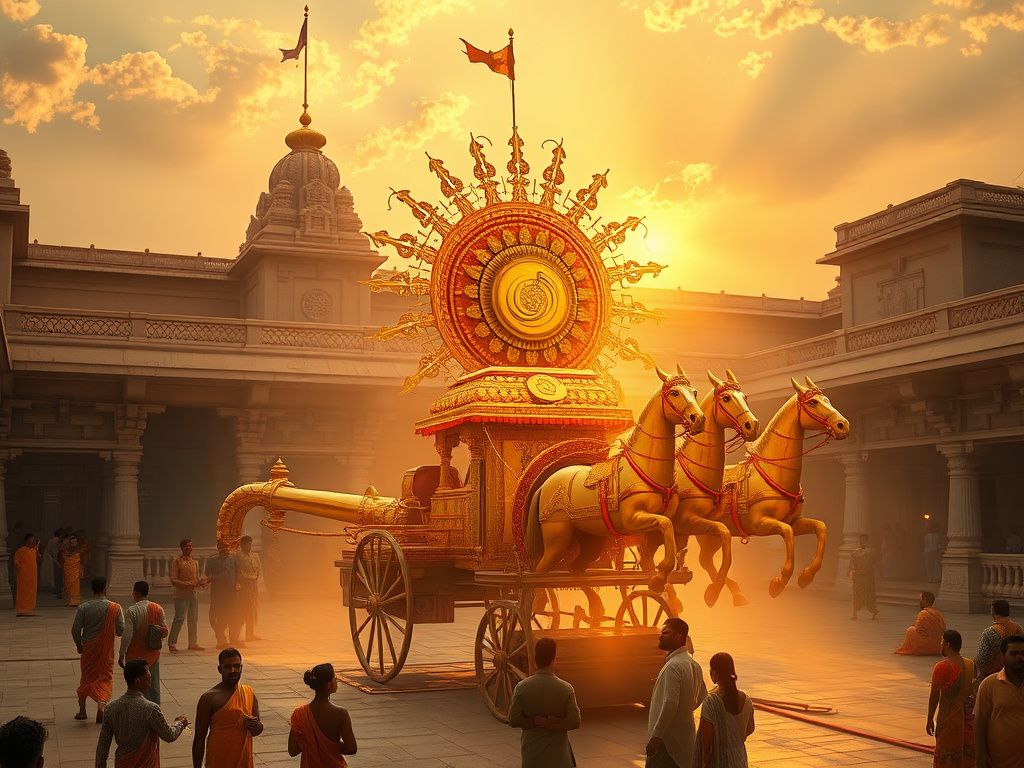
Ratha Saptami, also known as Surya Jayanti, is one of the most extraordinary festival days in the annual calendar at Tirumala. On this single day, Sri Malayappa Swamy is taken in procession on seven different vahanas, starting at dawn and concluding well into the night. The festival falls on Magha Shukla Saptami, typically in late January or early February according to the Hindu lunar calendar. No other day outside the nine-day Brahmotsavam offers pilgrims the chance to witness so many vahana sevas in a single visit.
If you ask me, Ratha Saptami is the most rewarding single day a pilgrim can spend at Tirumala short of the full Brahmotsavam, because the concentration of darshans across seven divine forms happens entirely within 14 hours.
Table of Contents
Why This Day Carries the Name Surya Jayanti
Ratha Saptami is observed as the birthday of Surya, the sun god. Hindu tradition holds that Surya manifested on this day, marking it deeply auspicious for sun-related observances. The number seven runs through every layer of the festival: the sun’s chariot is drawn by seven horses representing the seven days of the week, and the seventh lunar day of the bright fortnight in Magha month is considered the most potent solar moment of the year.
Beyond the celestial symbolism, Ratha Saptami marks the sun’s northward shift. This astronomical transition, called Uttarayan, reaches a noticeable midpoint around Magha Saptami, connecting the festival to both spiritual and seasonal change. At Tirumala, the Venkateswara tradition weaves this solar reverence directly into the vahana procession, opening with the Suryaprabha vahana at first light.
The Seven Vahanas and Their Sequence
The seven-vahana sequence on Ratha Saptami mirrors, in compressed form, the vahana cycle of the nine-day Salakatla Brahmotsavam. Each vahana carries its own theological meaning, and together they trace an arc from sunrise to moonrise. Always confirm the current year’s schedule on news.tirumala.org before travel.
| Time | Vahana | Theme |
|---|---|---|
| 5:30 AM | Suryaprabha Vahanam (Sun chariot) | The dawn, Surya at sunrise |
| ~7:30 AM | Chhinna Sesha Vahanam (Small Sesha) | Vishnu on the serpent |
| ~10:00 AM | Garuda Vahanam (Eagle) | Mid-morning, divine eagle |
| ~12:00 PM | Hanumantha Vahanam (Hanuman) | Mid-day, devotee-servant |
| ~4:00 PM | Kalpavruksha Vahanam (Wish-fulfilling tree) | Afternoon |
| ~6:00 PM | Sarva Bhoopala Vahanam (Universal emperor) | Evening |
| ~8:00 PM | Chandraprabha Vahanam (Moon chariot) | Night closing, Chandra after sunset |
The arc is deliberate: the day opens with the sun and closes with the moon, tracing the full journey of light across a single 14-hour window.
Sun-Themed Rituals Observed by Devotees
Devotees observe a distinct set of sun-related practices on Ratha Saptami:
- Argyam (sun offering) at sunrise, facing east with water and flowers
- Surya Namaskara (12 yoga postures honouring the sun), ideally before the Suryaprabha vahana begins
- Reading or listening to the Aditya Hridayam, the sun’s mantra from the Valmiki Ramayana
- Special pooja at home before departing for the temple
Pilgrims who observe the full day often combine home rituals before 4:00 AM with the climb to Tirumala to catch the 5:30 AM Suryaprabha procession.
The “Mini Brahmotsavam” Comparison
Devotees have long referred to Ratha Saptami as a “mini Brahmotsavam.” For pilgrims who cannot arrange a week-long Salakatla Brahmotsavam visit, it offers the same essential vahana experience in a single day. The same seven vahanas, the same mada streets, the same festive atmosphere, the only difference is timing density: seven sevas in 14 hours rather than one or two per day across nine days. This makes it particularly valued by pilgrims from distant states who can manage only one trip per year.
Crowd Reality and Booking Guidance
Ratha Saptami draws 100,000 or more devotees, making it one of the highest-footfall days of the year. Book accommodation 2-3 months ahead through ttdsevaonline.com, plan parking 2-3 km from the temple, and check train connections at irctc.co.in (nearest railhead: Tirupati). APSRTC operates special services; schedules at apsrtconline.in.
Practical Planning for the Full-Day Visit
Attending all seven processions requires a structured approach. The sequence runs from 5:30 AM to close to 8:00 PM; plan return from Tirumala no earlier than 11 PM.
- Reach Tirumala by 4:00 AM for the 5:30 AM Suryaprabha
- Spectators may stand freely along the mada streets; choose 1-2 vahana times if a full day is not feasible
- TTD offers reserved viewing; book Arjitha Seva for a sponsored procession through the official seva portal
- Carry water, snacks, and sunscreen, the hill gets warm in February
One thing to keep in mind is that each vahana’s time can shift by 30 to 60 minutes depending on the pace of rituals inside the temple; watch for announcements on news.tirumala.org closer to the festival date.
Common Questions
Are all seven vahanas on Ratha Saptami the same as those used during Brahmotsavam? Yes, the same vahanas are brought out in a compressed format. The principal difference is timing density: seven sevas in a single day rather than one or two per day across nine days.
When does Ratha Saptami fall each year? It falls on Magha Shukla Saptami, which typically lands in late January or early February. The exact 2026 date, and each year’s date, varies by the Hindu lunar calendar, so readers should confirm the current-year date on news.tirumala.org.
Is Surya Jayanti a Tirumala-specific festival? Surya Jayanti is observed across India as the sun god’s birthday. Tirumala’s seven-vahana procession is the site’s distinctive observance of the occasion, giving it a scale and ritual depth rarely matched elsewhere.
Can a pilgrim attend just one or two vahanas rather than all seven? Absolutely. The mada streets are open to all, and many pilgrims plan around one favourite vahana, Suryaprabha at dawn and Garuda at mid-morning are particularly popular choices.
How crowded is Ratha Saptami compared to ordinary days? Attendance exceeds 100,000 devotees, placing it among the top two or three highest-footfall days of the year. Arrive well before the first vahana to secure a viewing position.
Is accommodation available on the hill for Ratha Saptami? TTD guest houses fill up months ahead; book through ttdsevaonline.com. Staying in Tirupati town and ascending early is a practical fallback.
What is the significance of beginning with Suryaprabha and ending with Chandraprabha? The sun chariot opens the day at dawn and the moon chariot closes it at night, together spanning the full cycle of light. This sunrise-to-moonrise arc gives Ratha Saptami its particular spiritual coherence as a solar festival.
Related Reading
- Salakatla Brahmotsavam Master
- Dwajarohanam, Flag Hoisting
- Chinna Sesha Vahanam
- Kalpavruksha Vahanam
- Sarva Bhoopala Vahanam
- Suryaprabha Vahanam at Tirumala
- Garuda Vahana Seva at Tirumala