Table of Contents
Tirumala Dwajarohanam, The Flag-Hoisting Ceremony Opening Brahmotsavam
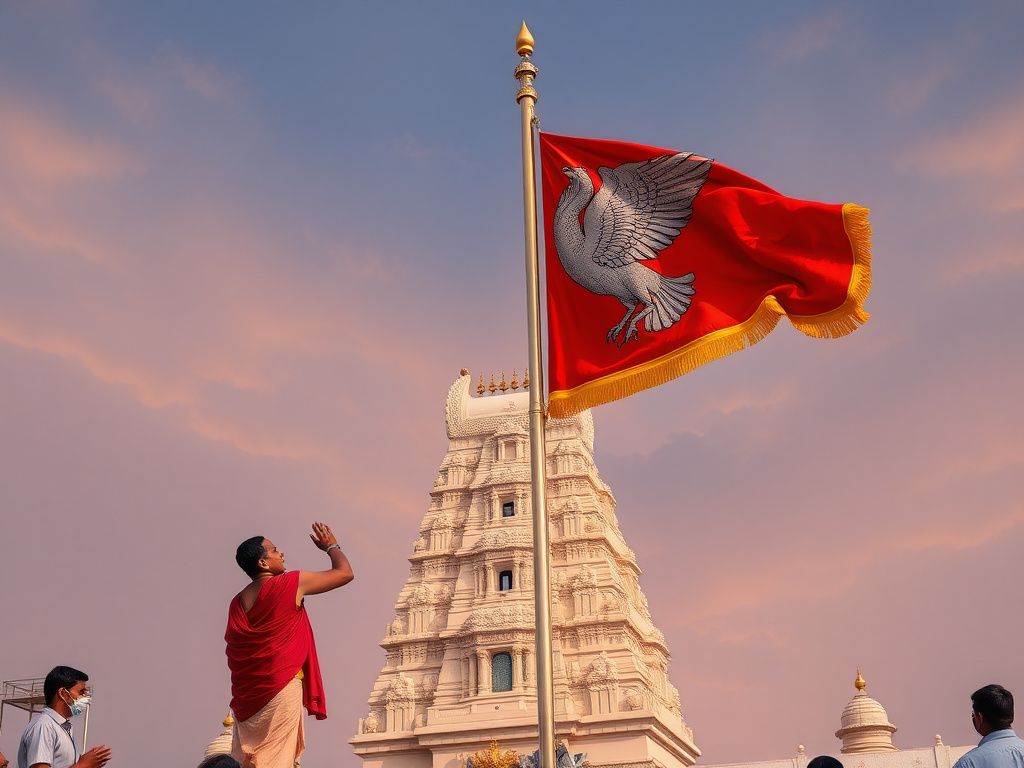
Dwajarohanam (also Dhwajarohanam) is the flag-hoisting ceremony that formally opens the annual Salakatla Brahmotsavam at Tirumala. Held on Day 1 of the nine-day festival in September-October, the ceremony hoists the sacred Garuda Dhwajam (Garuda flag) on the temple’s main flag-pole (dhwaja stambham), formally inviting all gods, sages, and divine beings from the celestial realms to attend the festival. The ritual is performed by chief temple archakas with elaborate Vedic mantras, and is closely followed by the night procession of Pedda Sesha Vahanam.
What the ritual involves
The Dwajarohanam ceremony sequence:
- Pre-dawn purification of the dhwaja stambham (flag pole) at the temple’s main entrance
- Vedic mantra chanting invoking the celestial beings, Brahma, Indra, Surya, Chandra, the eight Dikpalakas (guardians of the directions)
- The Garuda Dhwajam, a long ceremonial flag depicting Garuda (the divine eagle of Vishnu), is brought from the temple’s sacred storage
- The flag is gradually hoisted up the dhwaja stambham as the archakas chant
- At the top, the flag unfurls fully, the moment is considered the formal “invitation” sent to all divine beings
- Auspicious aarti and prasadam distribution mark the conclusion
Total ceremony time: approximately 90 minutes.
The flag’s symbolism
The Garuda Dhwajam carries deep theological meaning:
- Garuda, the divine eagle, vahana (vehicle) of Lord Vishnu. By depicting Garuda on the flag, the temple invites Vishnu (and all divine beings under his cosmic command) to attend
- Flag pole, the dhwaja stambham connects earth to the celestial realms, symbolising the temple as a meeting point of the human and divine
- Hoisting upward, the upward motion symbolises the prayer reaching the heavens
- Unfurling, the flag fully open is the moment of “arrival” of the divine guests
Timing
Dwajarohanam is performed in the early morning hours on Day 1 of Salakatla Brahmotsavam, typical timing 7:00-9:00 AM. The exact timing varies year to year based on the auspicious muhurtam calculated for that year.
The Pedda Sesha Vahanam night procession follows on the same Day 1, completing the festival’s opening day.
How to attend
- Spectator (free), The flag-hoisting takes place at the dhwaja stambham just outside the main temple entrance. Public viewing is permitted along the main approach. No ticket needed but the area is crowded.
- Reserved seating (paid), TTD sells reserved seating tickets for the Dwajarohanam viewing. Booking opens 30-60 days before the festival.
- VIP attendance, Donor-tier devotees, MLA/MP recommendation letter holders, and TTD trust members have separate reserved viewing.
What to expect on Dwajarohanam day
Practical reality:
- Tirumala is at peak occupancy from Day 1, accommodation completely sold out months ahead
- Approach to the temple area is restricted from 4:00 AM onwards on Day 1
- The dhwaja stambham viewing area fills up by 6:00 AM
- SVBC TV broadcasts the ceremony live, many devotees who can’t be physically present watch on TV
- Daily sevas (Suprabhata, Tomala, Kalyanotsavam) continue alongside but with festival-day priority adjustments
The historical context
The Dwajarohanam tradition at Tirumala has been documented since at least the Vijayanagara period. Inscriptions from the 14th-16th centuries reference the annual flag-hoisting ceremony as the formal opening of Brahmotsavam. The current Garuda Dhwajam fabric and design pattern have been preserved through generations of TTD priestly families.
The closing, Dwajavarohanam
Just as Dwajarohanam opens the festival on Day 1, Dwajavarohanam (flag lowering) formally closes the festival on Day 9. The Garuda Dhwajam is lowered with similar ceremony, marking the formal “departure” of the celestial guests. The combined opening-closing flag ceremonies form the festival’s ritual brackets.
Common questions
Can I sponsor the Dwajarohanam? Individual sponsorship of the flag-hoisting is not generally offered. Reserved seating tickets are available for viewing.
Is it broadcast on SVBC? Yes. SVBC carries live coverage of Dwajarohanam Day 1 and Dwajavarohanam Day 9.
Are children allowed in the viewing area? Yes. The early morning ceremony is family-friendly but be prepared for crowds and early waking.
What if I miss Day 1, can I see the flag during the rest of Brahmotsavam? Yes. The Garuda Dhwajam remains hoisted throughout the nine festival days. Visit the temple any day during the festival and you’ll see the flag flying.
For current Salakatla Brahmotsavam dates and Dwajarohanam timing, only use news.tirumala.org.
Related Articles
- Salakatla Brahmotsavam Master
- Chinna Sesha Vahanam
- Kalpavruksha Vahanam
- Sarva Bhoopala Vahanam
- Garuda Vahana Seva (Day 5)