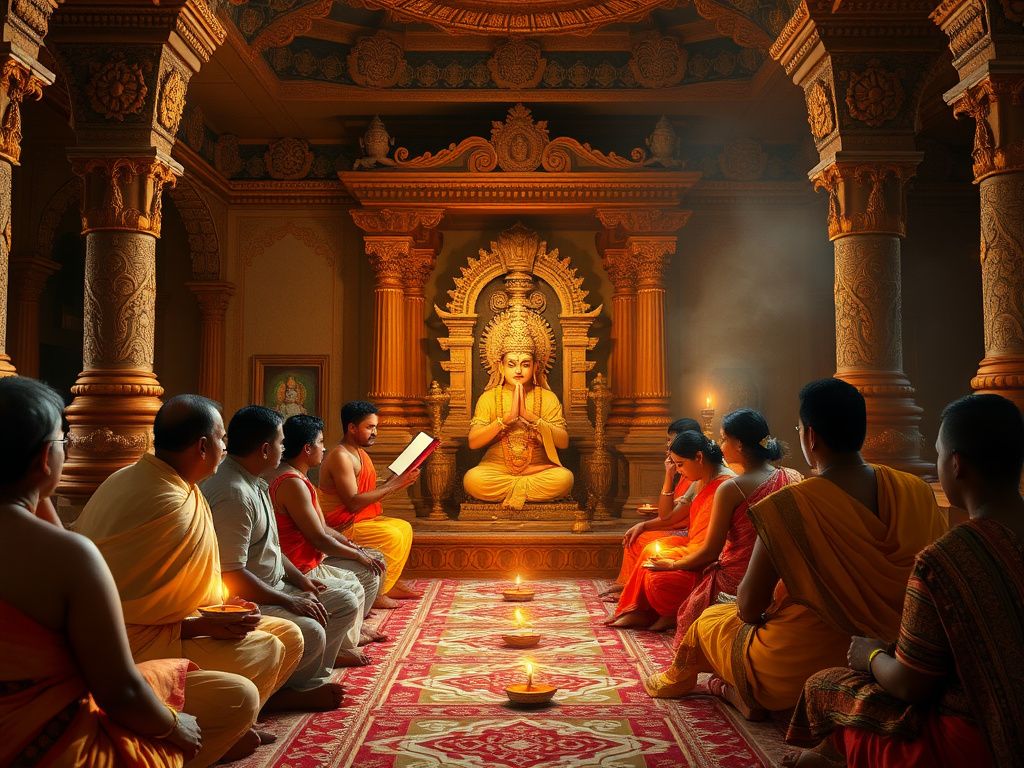
Kaisika Dwadasi brings one of the most quietly moving observances on the Tirumala calendar. Falling on the twelfth lunar day (Dwadasi) of the bright fortnight (Shukla Paksha) of the Karthika month, which corresponds to November, the day centres on a Sanskrit narrative that has shaped Sri Vaishnava devotion for centuries. Pilgrims who have timed a visit to coincide with the Asthanam (court ritual) and the night-long recitation of the Kaisika Purana often describe it as unlike any other experience the hill shrine offers.
The detail I’d flag for first-time visitors is that the entire observance, from the morning Asthanam to the overnight vigil, is open to all pilgrims present at the temple that day, with no prior registration required. That makes it unusually accessible for an event of its spiritual weight. Because the exact Gregorian date shifts each year with the lunar calendar, confirm the current year’s date at news.tirumala.org well before finalising travel.
Table of Contents
The Kaisika Purana: what the story says
The Kaisika Purana originates in the Varaha Purana, where Garuda narrates it to Lord Brahma. Its central figure is Nampaduvan, a lower-caste devotee who made a practice of singing devotional songs in praise of Vishnu on holy nights. On the night of Kaisika Dwadasi, a Brahma-Rakshasa, a cursed Brahmin spirit, confronted Nampaduvan and threatened to devour him.
Nampaduvan did not flee. Instead, he asked the Rakshasa to permit him to first complete his devotional singing for the lord. His composure and sincerity moved Vishnu himself to appear. The lord freed Nampaduvan from peril and simultaneously released the Rakshasa from his curse. That single act of steadfast bhakti, performed at midnight on this Dwadasi, gave the day its enduring sanctity.
Key theological points the story establishes:
- Devotion (bhakti) transcends social caste boundaries
- The sincerity of a vow, even under mortal threat, carries spiritual force
- Nampaduvan’s story is considered one of the foundational accounts in Sri Vaishnava bhakti tradition
- The Kaisika Purana is recited in Vaishnava temples across South India on this day, including at Srirangam and Tirumala
The Asthanam and what takes place at Tirumala
Tirumala’s observance is anchored by a special Asthanam, the formal court ritual, conducted early in the day. Temple pundits then perform a structured recitation of the Kaisika Purana in Sanskrit with a Telugu translation. Sri Malayappa Swamy, the processional deity, is given special darshan opportunities during the day. As night falls, pilgrims who have taken a vow to observe the tradition remain awake, chanting devotional songs until dawn, mirroring Nampaduvan’s own vigil. Special prasadam is distributed to those in attendance.
I’ll be upfront: TTD does not publish a detailed minute-by-minute schedule for this observance on its public pages, so the precise sequence of rituals on any given year is best confirmed through news.tirumala.org or the official TTD portal at tirumala.org.
How to participate
Participation requires no special booking or registration:
- Free public attendance: The Asthanam and Kaisika Purana recitation are open to all pilgrims present at the temple that day.
- Devotional vigil: Traditional observance involves staying awake through the night, chanting devotional songs. This is a personal vow rather than a ticketed event.
- Dress code: Standard TTD dress code applies. The atmosphere is contemplative, and pilgrims maintain silence during the recitation and Asthanam portions.
- Language access: The Purana recitation is primarily in Sanskrit with a Telugu translation. English subtitles are not provided in the temple hall, but the devotional atmosphere is accessible to pilgrims of any language background.
Many devotees plan a 2-3 day Tirumala visit around Kaisika Dwadasi. A practical structure: arrive the day before and complete standard darshan and accommodation, spend Kaisika Dwadasi itself in the morning Asthanam followed by daytime devotion and the night vigil, then use the following day for any remaining darshan, prasadam collection, and departure. Accommodation and darshan slots can be booked through ttdsevaonline.com. For transport, APSRTC runs regular services to Tirupati from across Andhra Pradesh and Telangana, with bus bookings via apsrtconline.in.
Connection to Tarigonda Vengamamba
The shrine of Tarigonda Vengamamba on Tirumala is a related spiritual landmark for devotees attending Kaisika Dwadasi. Vengamamba, the saint-poetess, was a devoted Vaishnava who emphasised the Kaisika tradition in her own compositions. Visiting her shrine the same day layers another dimension onto the pilgrimage, connecting the ancient Puranic narrative to a historical figure who lived and worshipped on the hill.
Common questions
Is Kaisika Dwadasi specific to Tirumala? No. The day is observed across many South Indian Vaishnava temples, including Srirangam. Tirumala’s Asthanam is particularly significant for its scale and the prominence of the Sri Malayappa Swamy darshan.
Do I need to register or pay to attend the Asthanam? No. The Asthanam and Kaisika Purana recitation are open to all pilgrims present at the temple that day. No separate ticket or registration is required.
What does the night vigil involve? Pilgrims who have taken a vow stay awake through the night chanting devotional songs, following the pattern of Nampaduvan’s own vigil in the Purana. There is no compulsory programme; the vigil is a personal devotional practice.
When exactly does Kaisika Dwadasi fall? It is the twelfth lunar day of the bright fortnight of the Karthika month, typically in mid-to-late November. Because the lunar calendar does not align uniformly with Gregorian dates, the exact date varies each year. Check news.tirumala.org closer to the season for the confirmed date.
Is the Purana recitation conducted in English? The recitation is primarily in Sanskrit with a Telugu translation. English is not used in the temple hall recitation. Pilgrims who do not know Sanskrit or Telugu can still participate in the overall devotional atmosphere.
What is a Brahma-Rakshasa? The term refers to a cursed Brahmin spirit in Hindu mythology, a soul undergoing a difficult form of existence as a result of past transgressions. In the Kaisika Purana narrative, the Rakshasa’s encounter with Nampaduvan ultimately leads to his own liberation.
Can Kaisika Dwadasi be combined with a regular Sarvadarshanam visit? Yes. Many pilgrims time a regular Tirumala darshan trip to coincide with the day. Standard darshan queues, accommodation, and prasadam counters operate normally alongside the special Asthanam programme.
Related reading
- Salakatla Brahmotsavam: dates, full schedule, and significance
- Dwajarohanam: flag hoisting at Tirumala
- Chinna Sesha Vahanam
- Kalpavruksha Vahanam at Tirumala
- Sarva Bhoopala Vahanam at Tirumala