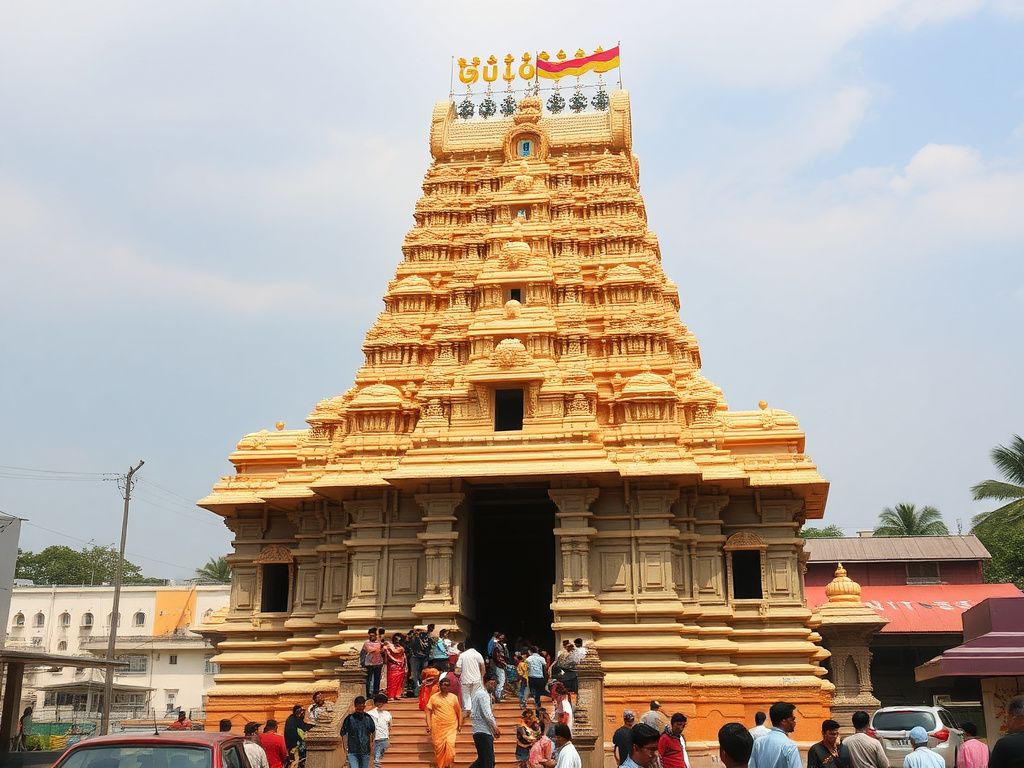
Sri Kodanda Rama Swamy Temple sits close to the heart of Tirupati city, roughly 1 km from Tirupati Railway Station, making it one of the most accessible major temples in the entire Tirupati pilgrim circuit. Dedicated to Lord Rama in his Kodanda form, the warrior bearing the divine bow, alongside Sita Devi and Lakshmana, this TTD-administered temple draws both devoted Rama worshippers and pilgrims who want to complete the Vaishnava strand of a Tirupati visit. Unlike the hilltop shrine at Tirumala, this one asks nothing more than a short walk or auto-ride from wherever you are staying in the city.
The name itself tells you what to expect. Kodanda comes from Sanskrit, meaning bow, while Rama refers to the seventh avatar of Vishnu. Together, Kodanda Rama is “Rama with the bow”, Rama in his warrior aspect, holding the Kodanda bow that Sage Agastya gifted him. The iconography inside the main sanctum reflects exactly this: the principal deity stands in a composed but powerful pose, flanked by Sita Devi and Lakshmana, the three forming the complete Ramayana trinity that pilgrims travel from across South India to see.
Table of Contents
History and Significance of the Temple
The Tirupati region has long been a confluence of Vaishnava devotion. Sri Kodanda Rama Swamy Temple stands in good company alongside Sri Govindaraja Swamy Temple and the great shrine of Venkateswara at Tirumala. For devotees who specifically revere Rama as their primary deity, rather than Venkateswara, this temple is the natural focal point of a Tirupati visit. Its administration under TTD (Tirumala Tirupati Devasthanams) means it follows the same rigorous ritual standards, dress codes, and festival observances that govern the larger Vaishnava shrines in the district.
The detail I’d flag for first-time visitors is the Hanuman shrine within the complex. Devotees typically visit Hanuman first before entering the main sanctum, following the traditional belief that seeking Hanuman’s blessing opens the way for Rama darshan. The outer mandapas carry sculptures drawn from the Ramayana epic, giving the space a narrative quality that rewards a slow, attentive walk rather than a rushed darshan. The Andal shrine and the Sri Ramanuja shrine within the same complex extend the visit into the broader tradition of Sri Vaishnavism, connecting Rama devotion to the Tamil Alwar saint-poetess and the great acharya who systematised Vishishtadvaita philosophy.
Location and Distances
The temple is located adjacent to the Sri Govindaraja Swamy Temple area in central Tirupati. The key distances are:
- Approximately 1 km from Tirupati Railway Station, walkable in about 15 minutes, or a short auto-rickshaw ride for around Rs. 50
- 2 km from the APSRTC central bus stand, auto fare typically Rs. 80–100
- 500 m from Sri Govindaraja Swamy Temple, a 5-minute walk
- 6 km from Tiruchanoor, reachable by auto or app-based cab
- 22 km from Tirumala (top of the ghat road), descend the ghat road and enter Tirupati city
Auto-rickshaws, Ola, and Uber all serve this part of Tirupati without difficulty. Pilgrims arriving by train from Chennai, Bangalore, or Hyderabad can plan this temple as the first stop on a morning walk from the station before returning for breakfast.
Temple Timings
The temple opens in two sessions each day. The morning session runs from 5:30 AM to 12:00 PM and the evening session from 4:00 PM to 8:30 PM. Arriving early, particularly for the 5:30 AM opening, means shorter queues and a cooler walk if you are combining this with Sri Govindaraja Swamy Temple the same morning.
One limitation to be straight about: festival timings and any temporary schedule changes are not always reflected in third-party sources promptly. Before travelling, check the official listing at tirumala.org/TemplesAtTirupathi.aspx or look for announcements on news.tirumala.org to confirm the temple is operating normally on your visit date.
Daily Sevas and Festivals
The daily ritual cycle at Sri Kodanda Rama Swamy Temple follows the standard Vaishnava pattern. Sevas performed each day include Suprabhata Seva (the early morning awakening), Tomala (flower offering), Archana (recitation of divine names), Bhoga (food offerings), and Ekantha (the closing ritual). This structured cycle mirrors the approach used at larger Vaishnava temples in the TTD network, ensuring continuity of worship throughout the day.
The major annual festivals are:
- Rama Navami (April): Lord Rama’s birthday, the principal celebration of the year, drawing large crowds for multi-day observances
- Dasara / Vijayadashami: Marks Rama’s victory over Ravana, a particularly meaningful festival at a temple dedicated to Rama in his warrior form
- Brahmotsavam: The nine-day annual festival with vahana processions that brings the deity through the streets around the temple
- Annual Float Festival (Teppotsavam): A traditional festival held on the temple tank
For confirmed festival dates in the current year, the TTD seva booking portal at ttdsevaonline.com carries schedule updates for temples across the Tirupati district.
Combining This Temple With Other Tirupati Shrines
The temple’s central location makes it easy to build a three-temple morning circuit in Tirupati city. A practical sequence that many pilgrims follow:
- Sri Govindaraja Swamy Temple, open from 5:30 AM, allow 90 minutes for darshan
- Walk 500 m to Sri Kodanda Rama Swamy Temple, darshan plus Hanuman shrine visit
- Optional extension toward Sri Kapileswara Temple, slightly further but reachable on foot or by auto
- Return to accommodation for breakfast before heading to Tirumala or Tiruchanoor
This circuit takes roughly 3–4 hours and covers three significant Tirupati city temples in a single morning. The Tirupati region spans both Vaishnava temples (Venkateswara, Govindaraja, Kodanda Rama) and Shaiva temples (Kapileswara at Kapila Theertham, Srikalahasti nearby), visiting Kodanda Rama completes the Vaishnava aspect of the city circuit before you ascend the ghat road to Tirumala. Pilgrims travelling by train can book their onward journey via irctc.co.in and those using APSRTC services can check bus schedules at apsrtconline.in.
Dress Code and Practical Notes
Standard TTD-style dress code applies at this temple. Men should wear a dhoti, pyjama with kurta, or a plain shirt. Women are expected to wear a saree, half-saree, or chudidar with dupatta. Shorts, sleeveless tops, and Western casuals are generally not permitted at the entrance. Footwear is deposited at the entry point; lockers are available for small items. Allow 30–60 minutes for darshan plus walking time within the complex.
Common Questions
Is Sri Kodanda Rama Swamy Temple under TTD? Yes, the temple is administered by Tirumala Tirupati Devasthanams, the same body that oversees the Venkateswara shrine at Tirumala and Sri Govindaraja Swamy Temple in Tirupati city.
How far is the temple from Tirupati Railway Station? It is approximately 1 km, around a 15-minute walk or a short auto-rickshaw ride for roughly Rs. 50.
Is photography allowed inside? Photography outside the sanctum is generally permitted. Inside the main sanctum, it is typically not allowed, as is standard at most TTD-administered temples.
What prasadam is distributed at the temple? Standard South Indian temple prasadam is offered: pulihora (tamarind rice), pongal, and sometimes laddu, depending on the day and the festival calendar.
Is the temple accessible for visitors with mobility difficulties? The temple is mostly accessible, with minor steps at certain points; assistance is generally available on request for visitors who need it.
Can this temple be visited on the same morning as Sri Govindaraja Swamy Temple? Yes, the two temples are 500 m apart, making them natural companions in a single morning circuit starting from 5:30 AM.
When is the best time to visit to avoid crowds? The early morning session opening at 5:30 AM sees lighter crowds than midday; Rama Navami in April is the busiest period of the year by a considerable margin.
Related Reading
- Sri Padmavathi Temple (Tiruchanoor)
- Sri Govindaraja Swamy Temple
- Sri Kalyana Venkateswara Temple
- Vakula Matha (Foster Mother)
- Sri Kapileswara Temple & Kapila Theertham