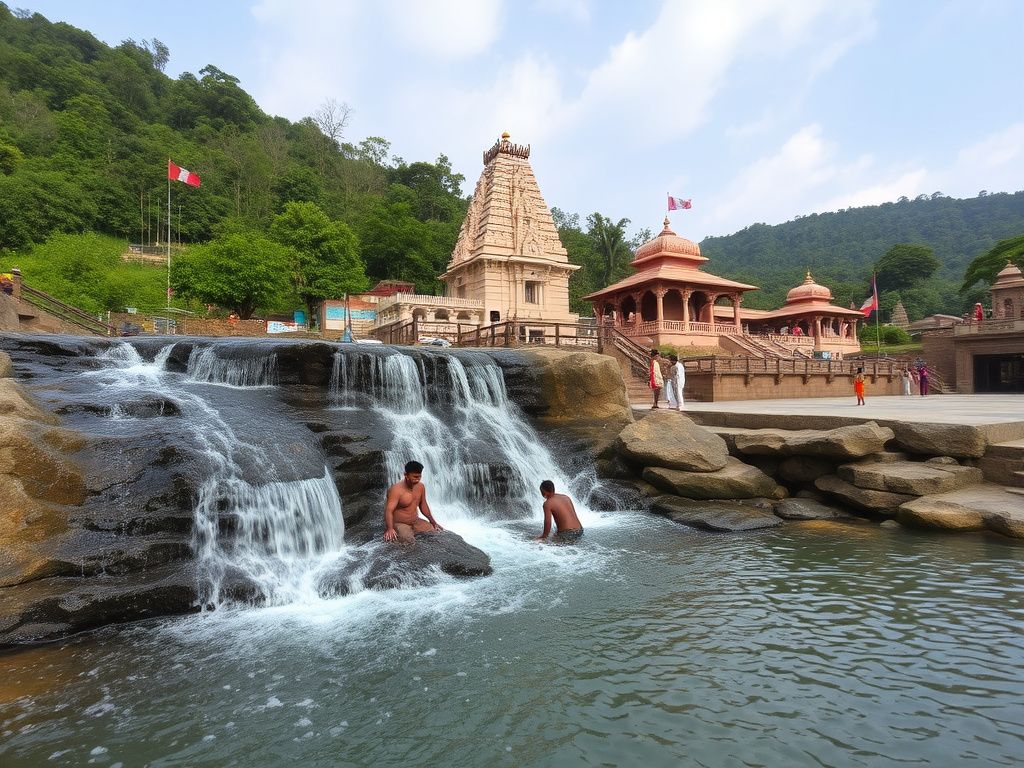
Kapila Theertham is a small natural waterfall at the base of the Tirumala hills, tucked against the southern face of the sacred mountain range just 4 km from Tirupati city. The waterfall gives its name to the site and to the ancient Sri Kapileswara Swamy Temple that stands beside it. For many pilgrims, a visit here completes the Tirupati circuit, balancing the Vaishnava worship at Tirumala with an act of devotion to Lord Shiva. If you ask me, the quiet forest setting makes Kapila Theertham one of the most contemplative stops on any Tirupati pilgrimage, a genuine contrast to the vast crowds at the main Venkateswara temple above.
The temple commemorates sage Kapila, one of the most revered sages in Hindu thought and the traditionally recognized founder of the Samkhya school of philosophy. The waterfall, the temple, and the theertham pool all carry his name, rooting this place in both mythological and philosophical heritage.
Table of Contents
The Legend of Sage Kapila and the Sacred Waterfall
According to the Sthala Purana associated with this site, sage Kapila chose the forested base of the Tirumala hills as the ground for his long and intense penance. He meditated here for years, his austerities so concentrated that the surrounding rocks themselves were said to have absorbed his spiritual heat. As his penance deepened, water emerged from the rocks, not from rainfall or a river source above, but from the earth itself, as if responding to the power of his tapas.
That water continues to flow today as Kapila Theertham. The tradition holds that the waterfall is not merely natural but a direct product of the sage’s meditation, making the water intrinsically sacred. Lord Shiva, moved by the severity of Kapila’s penance, manifested at this spot and is worshipped here as Sri Kapileswara, meaning “Lord of Kapila” or “Kapila’s Shiva.” The name preserves the whole story in two words.
This sthala purana places Kapileswara among a category of Shaiva shrines where the deity is understood to have appeared voluntarily, not been installed by human hands. Devotees treat this distinction as significant: the lingam in the sanctum is considered a svayambhu form, self-manifested through divine will.
The Waterfall and Its Ritual Significance
The waterfall itself is modest in scale, 1 to 2 metres, but its religious weight is considerable. The theertham pool at its base is the primary bathing spot. Devotees consider bathing here both purifying and auspicious, and the water is regarded as drinkable theertham in the traditional sense: sacred water that confers merit. Adjacent rocks offer natural ledges where pilgrims can sit quietly for a short period of meditation, continuing the tradition of the sage who made the place what it is.
The waterfall flows throughout the year, fed by the springs of the Tirumala hill system. Flow peaks in the post-monsoon months of October through December, when the hillside springs run strongest. Even in drier months, the flow does not stop entirely, which pilgrims take as confirmation of the legend’s claim that the water is not seasonal rainfall but something deeper.
Bathing in the theertham is especially popular on auspicious days. Pradosham, the 13th lunar day observed twice each month at twilight, draws the most dedicated Shiva devotees, who combine the theertham bath with the evening Pradosha puja inside the temple. Maha Shivaratri, observed in February or March, brings the largest crowds of the year. Karthika Pournima in November is another significant day with special puja and gatherings.
Inside the Temple
Sri Kapileswara Swamy Temple is not under TTD (Tirumala Tirupati Devasthanams) administration. It is managed separately by its own local temple committee, which means procedures differ from TTD-run shrines. General darshan is free and open to all pilgrims. Special abhishekam is available for booking through the temple’s local management, with specific morning slots, visitors should verify timings directly at the temple or ask locally in Tirupati, as the temple does not maintain a significant online presence.
The temple complex includes the main Shiva lingam in the sanctum, a shrine to sage Kapila himself, a shrine to Goddess Kamakshi as Shiva’s consort, several smaller deity shrines, the theertham pool with bathing access, and a small annaprasadam counter that provides free meals on auspicious days. Morning hours run from 5:00 AM to 12:00 PM and evening hours from 4:00 PM to 8:30 PM, with a lunch-break closure in between.
Reaching Kapila Theertham
The temple sits approximately 4 km from Tirupati city, making it easily accessible. From Tirupati Railway Station the journey takes 15 to 20 minutes by auto-rickshaw or taxi. From the APSRTC central bus stand the distance is 5 km, with similar travel time. Pilgrims coming directly from Tirumala at the top must drive 25 km down the ghat road before continuing to the temple. From Tiruchanoor, the distance is 8 km. Bus connections to Tirupati are available through apsrtconline.in, and train schedules into Tirupati can be checked via irctc.co.in.
One thing to keep in mind is that the natural setting, forested slopes, rock steps leading to the theertham, means accessibility is limited for visitors with mobility difficulties. The theertham bathing area involves descending steps, and there is no formal ramp arrangement.
Planning the Visit Within the Tirupati Circuit
A practical sequence followed by many pilgrims: arrive in Tirupati and settle, then visit Sri Kapileswara Swamy Temple and take the theertham bath in the evening. The next morning proceed to Tirumala for Venkateswara darshan. In the afternoon, Tiruchanoor Padmavathi temple is a natural follow-on. An optional extension to Sri Kalahasti (35 km from Tirupati) or the Srikalahasti Temple rounds out a full Shaiva-Vaishnava circuit. Pilgrims who follow both traditions find Kapileswara particularly meaningful because it allows them to honour both within one Tirupati visit.
Pack standard temple offerings, flowers, fruits, coconut, betel leaves, along with a change of clothes and a towel if planning to bathe. Bring cash for any pooja bookings since there is no online booking facility for Kapileswara. Camera use is permitted outside the sanctum but not inside. Budget 1 to 2 hours for the full visit, including darshan, the theertham bath, and time for quiet reflection. For special days and festivals, news.tirumala.org covers the broader Tirupati pilgrim calendar, and TTD seva bookings for the Tirumala portion of the trip can be managed at ttdsevaonline.com.
Common questions
Is Kapila Theertham part of TTD? No. Sri Kapileswara Swamy Temple is administered separately and is not under TTD jurisdiction. Entry is free and no TTD booking is required.
Why is the waterfall considered sacred? The Sthala Purana holds that the water emerged from the earth during sage Kapila’s intense penance at this site, making it divinely sourced rather than ordinary groundwater. Bathing in it is considered purifying and meritorious.
Can children bathe in the theertham? Yes, supervised. The pool is shallow at the bathing area, though visitors should exercise normal care on the rock steps leading down to it.
What is the best time of year to visit? The waterfall is fullest from October through December in the post-monsoon period. Special visits during Maha Shivaratri or Pradosham days carry extra religious significance, though those days draw larger crowds.
Is photography allowed at the temple? Photography is permitted in the outer areas and near the waterfall. It is not permitted inside the sanctum.
How far is Kapila Theertham from Tirupati city? The temple is approximately 4 km from Tirupati city and 4 km from Tirupati Railway Station, reachable in 15 to 20 minutes by auto-rickshaw or taxi.
Are there food facilities on-site? A small annaprasadam counter provides free meals on auspicious days. For other days, food is available in Tirupati city, which is a short auto ride away.
Related reading
- Sri Padmavathi Temple (Tiruchanoor)
- Sri Govindaraja Swamy Temple
- Sri Kalyana Venkateswara Temple
- Vakula Matha (Foster Mother)
- Sri Kodanda Rama Swamy Temple