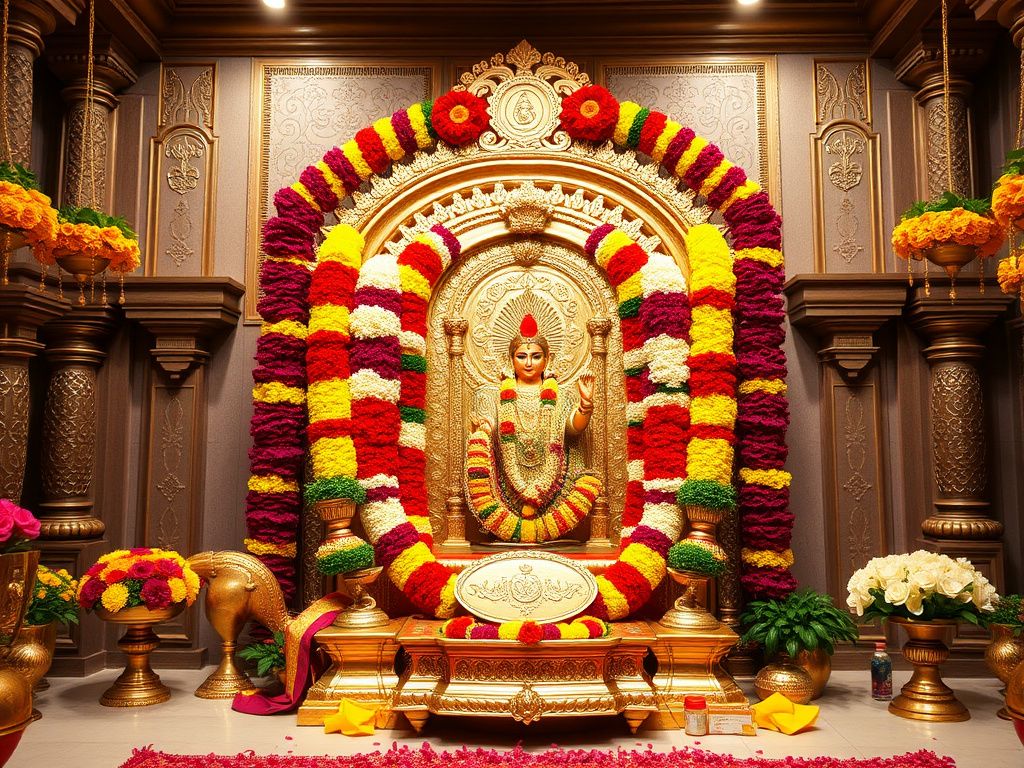
The Sri Bhu Varaha Swamy Temple at Tirumala occupies a place of quiet but profound importance in the pilgrimage cycle of the sacred hill. Positioned at the edge of the Swami Pushkarini tank, adjacent to but distinct from the main Venkateswara sanctum, it is the shrine where pilgrims traditionally seek blessings before proceeding to the principal darshan. Once every year, this temple comes alive for five consecutive days with the Panchahnika Kalyanotsavam, a wedding festival that re-enacts the divine marriage of Sri Bhu Varaha Swamy and Goddess Bhu Devi in full ceremonial splendour. My own take is that pilgrims who time their visit to coincide with these five days witness a depth of ritual that the usual Tirumala itinerary simply cannot offer.
The name itself explains the celebration: Pancha means five, and Ahnika means days’ worth of observance. Together, Panchahnika translates to “five-day observance, ” and the entire arc of the festival, from the formal declaration of wedding intent to the closing flower sacrifice, unfolds across those five consecrated days.
Table of Contents
The Varaha Avatar and the Myth Behind the Festival
Vishnu’s third avatar in Vaishnava theology is Varaha, the divine boar. The cosmic demon Hiranyaksha had seized Bhu Devi, the earth goddess, and dragged her to the depths of the primordial ocean. Vishnu manifested as Varaha, a boar of vast cosmic dimensions, dived into those depths, defeated Hiranyaksha in battle, and lifted Bhu Devi back to the surface on his tusks. The rescue is not merely a heroic act; it becomes the foundation of a cosmic union. Varaha and Bhu Devi are wedded, and that marriage is precisely what the Panchahnika Kalyanotsavam celebrates each year at Tirumala.
This narrative also explains why Bhu Devi appears in multiple ritual threads on the sacred hill. She is Varaha’s consort in the Varaha temple and simultaneously one of Venkateswara’s two consorts, alongside Sridevi, in the main temple. Her presence in the daily Kalyanotsavam at the main Venkateswara temple and in this five-day annual celebration at the Varaha temple reflects her dual cosmic role: earth as Varaha’s beloved after the great rescue, and earth as Venkateswara’s consort in the Kali Yuga form of Vishnu.
The Five-Day Ritual Structure
Each of the five days carries its own ceremonial focus, and the sequence moves through the traditional stages of a Vedic wedding with careful deliberation.
Day 1, Vivaha Sankalpam: The festival opens with the formal declaration of wedding intent. The processional idols of Sri Bhu Varaha and Bhu Devi are prepared and consecrated for the days ahead. The Sankalpam establishes the ritual space and sets the auspicious intention for the ceremonies to follow.
Day 2, Mangalasnanam: The deities undergo a ritual bath, symbolising purification ahead of the wedding. This preparatory rite follows traditional Agamic practice and is accompanied by Vedic recitation.
Day 3, Main Kalyana: The formal wedding ceremony takes place with full Vedic mantras. This is the heart of the Panchahnika and the day that draws the largest attendance. The sacred union of Varaha and Bhu Devi is performed in the same spirit as any auspicious Vedic marriage.
Day 4, Sri Bhu Varaha Asthanam: A post-wedding court ritual in which the deities are honoured in a royal assembly setting. Sponsoring devotees regard attendance at the Asthanam as particularly auspicious.
Day 5, Pushpa Yagam: The festival concludes with a flower sacrifice. The Pushpa Yagam is the formal closing ceremony, sealing the five days with an offering of flowers and the completion of all Vedic rites.
How Panchahnika Differs from the Daily Kalyanotsavam
The main Venkateswara temple conducts a Kalyanotsavam every single day of the year. Devotees can participate as a couple at a cost of Rs. 1,500 per couple, and the ritual runs as an approximately one-hour ceremony. Panchahnika at the Varaha temple is an entirely separate event: it is annual rather than daily, lasts five full days rather than a single hour, centres on Sri Bhu Varaha and Bhu Devi rather than Venkateswara, and the sponsorship cost for the Arjitha (sponsored) seva varies by year rather than carrying a fixed tariff.
The two festivals complement each other rather than compete. A pilgrim who attends the daily Kalyanotsavam at the main temple is honouring Venkateswara’s wedding; a pilgrim who attends Panchahnika is honouring the older rescue-and-union story from which the Tirumala sacred geography itself draws meaning.
Attending the Festival: Practical Guidance
The Varaha temple’s courtyard is open to all pilgrims throughout the Panchahnika festival at no charge. There is no ticket or token required for general attendance; pilgrims may join the proceedings in the open precinct and witness the rituals as they unfold each day.
Devotees who wish to sponsor the event, the Arjitha Panchahnika Kalyanotsavam Seva, may book through TTD’s official online portal at ttdsevaonline.com. The sponsorship fee varies from year to year; check the portal for the current tariff before planning. Sponsored devotees receive priority placement and are specifically honoured during the Day 4 Asthanam viewing.
One honest caveat: exact festival dates shift with the Hindu calendar from one year to the next, and TTD announces the schedule closer to the event. Confirm the current year’s Panchahnika Kalyanotsavam dates directly on news.tirumala.org before booking travel.
The traditional pilgrim sequence at Tirumala calls for Varaha darshan first, before proceeding to the main Venkateswara temple. If the Panchahnika is in progress during your visit, joining even a portion of the daily rituals aligns naturally with this sequence. For transport planning, buses can be checked via apsrtconline.in and train connections through irctc.co.in.
Common Questions
What does Panchahnika mean? Panchahnika combines Pancha (five) and Ahnika (days’ worth of observance), meaning a five-day ceremonial event. The full name Panchahnika Kalyanotsavam therefore means the five-day wedding festival.
When does the Panchahnika Kalyanotsavam take place? Annually, in a specific window of the Hindu calendar that varies from year to year. TTD announces the exact dates ahead of the event; the most reliable source for current-year dates is news.tirumala.org.
Is the Sri Bhu Varaha temple separate from the main temple? Yes. The Varaha temple stands at the edge of the Swami Pushkarini tank, adjacent to but architecturally distinct from the main Venkateswara sanctum. It has its own priests, its own schedule of daily rituals, and its own Agamic traditions.
Should I visit the Varaha temple before or after main temple darshan? The traditional pilgrim sequence is Varaha temple first, then the main temple. If Panchahnika is under way during your visit, honouring Varaha Swamy at that moment carries an added layer of significance within the established ritual order.
Can anyone attend, or is a ticket required? General attendance in the temple courtyard during the festival is free and open to all pilgrims. Booking the Arjitha Panchahnika Kalyanotsavam Seva, the sponsored participation, requires a separate booking through TTD and carries a cost that varies by year.
How does the Rs. 1,500 Kalyanotsavam at the main temple relate to Panchahnika? The daily Kalyanotsavam at the main Venkateswara temple (Rs. 1,500 per couple) is a separate seva held year-round. Panchahnika is the Varaha temple’s annual counterpart, a five-day extended celebration with its own distinct sponsorship structure and ritual content.
What is the Pushpa Yagam on Day 5? Pushpa Yagam is a flower sacrifice that forms the formal closing ceremony of the Panchahnika. It involves offerings of flowers accompanied by Vedic rites and marks the conclusion of the five-day festival.
Related Reading
- Salakatla Brahmotsavam Master
- Dwajarohanam, Flag Hoisting
- Chinna Sesha Vahanam
- Kalpavruksha Vahanam
- Sarva Bhoopala Vahanam