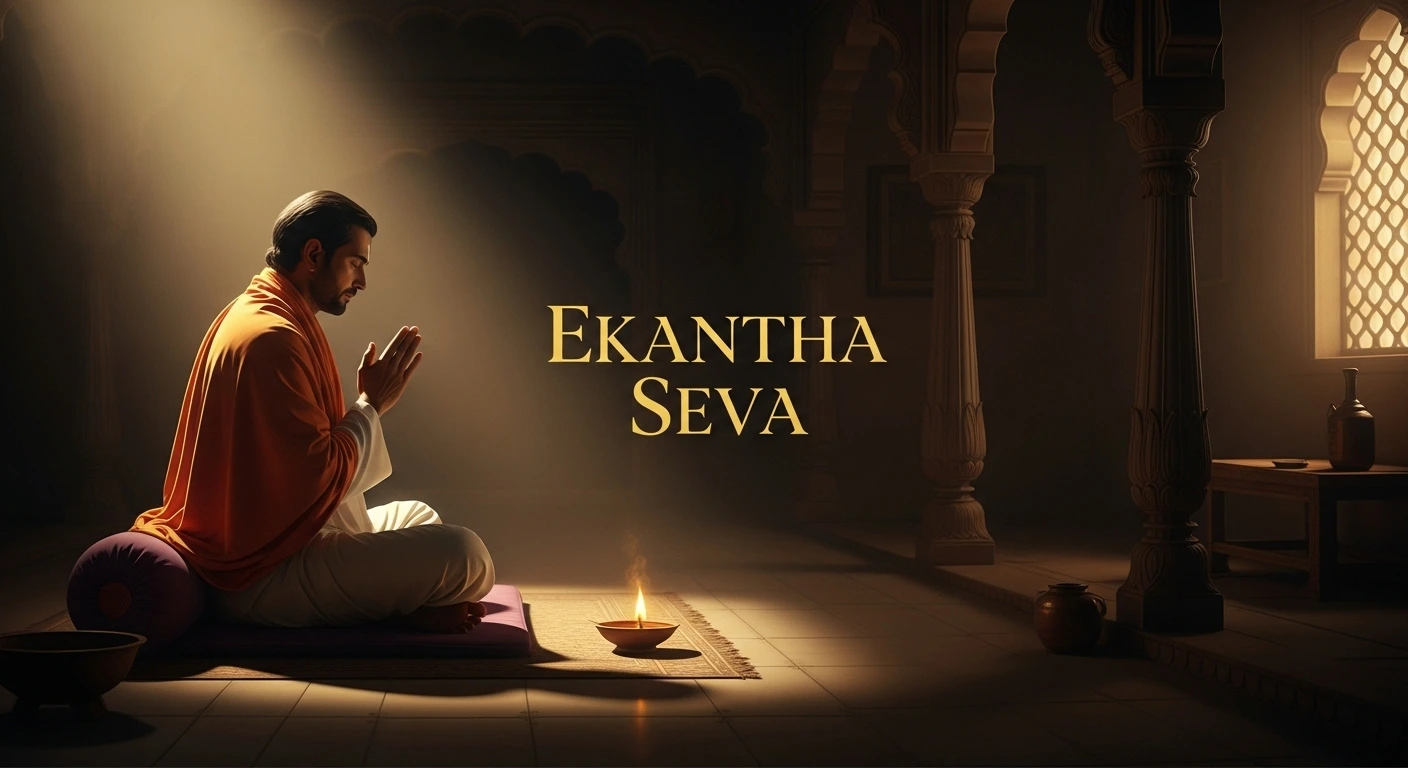
Experience the profound serenity of Ekantha Seva at Tirumala – where Lord Venkateswara’s day ends with celestial lullabies and ancient devotion. Discover the myths, meanings, and sacred traditions that make this closing ritual unforgettable.
Table of Contents
A Divine Goodnight Like No Other
Have you ever wondered what happens when the temple doors close at Tirumala and the last devotee leaves? I still remember the first time I learned about Ekantha Seva during my early morning visit to the temple. Standing outside the closed Bangaru Vakili at 2 AM, watching the final lights dim, I felt an inexplicable sense of peace. That’s when a temple priest explained to me that inside, something profoundly beautiful was happening – the Lord was being put to celestial sleep.
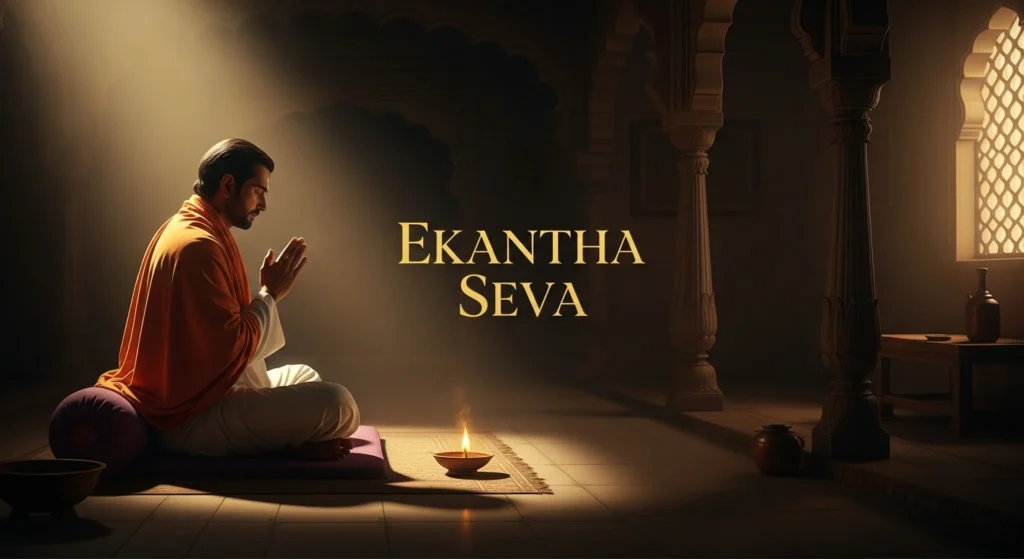
The Ekantha Seva at Tirumala isn’t just another temple ritual. It’s the sacred closing ceremony that marks the end of a divine day filled with thousands of darshans, countless prayers, and endless seva. This ancient tradition, performed every night around 1:30 AM for centuries, represents the most intimate moment between the deity and his devoted servants. Unlike the public sevas where thousands gather, Ekantha Seva happens in solitude, with only priests present – hence the name “Ekantha” which literally means “leaving in solitude.
In this comprehensive guide, I’ll take you through the myths, meanings, and sacred symbolism of Ekantha Seva. Whether you’re planning your first pilgrimage to Tirumala or you’re a devoted regular seeking deeper understanding, you’ll discover why this closing ceremony holds such profound significance in Hindu temple worship traditions.
What is Ekantha Seva? Understanding the Sacred Sleep Ritual
Ekantha Seva goes by several names – Pavalimpu Seva (putting to sleep) and Panupu Seva (going to bed) – each revealing a different aspect of this beautiful ritual. As the final seva in the daily worship cycle at the Tirumala Venkateswara Temple, it marks the conclusion of all temple activities.
The ritual centers around the Bhoga Srinivasa Murthi, the silver processional deity that represents Lord Venkateswara. After a long day of receiving devotees and blessings, the deity is ceremoniously placed on a golden swing cot suspended by silver chains in the Sayana Mandapam (the resting chamber). Think of it as tucking in a beloved child after a fulfilling day – except here, we’re speaking of the Lord of the Seven Hills himself.
The timing of Ekantha Seva is remarkably consistent. Every night, without fail, the ritual begins around 1:30 AM. This is when all darshan services officially close, the Sarvadarshanam queues empty, and the temple transitions from its public role to a sacred private space. The precision of this timing, maintained for centuries, shows the deep respect and devotion that characterizes temple traditions.
What makes this ritual truly special is its exclusive nature. Unlike other sevas where devotees can participate or witness the ceremonies, Ekantha Seva is performed solely by the temple priests. No pilgrims are allowed inside the sanctum during this time. This exclusivity isn’t meant to keep devotees away but rather to preserve the intimate, personal nature of the Lord’s rest. It’s a reminder that even deities need their moments of privacy and peace.
The Beautiful Ritual: How Ekantha Seva Unfolds
Walking through the steps of Ekantha Seva feels like witnessing poetry in motion. The preparation begins around 1:00 AM with the “suddi” – the cleaning and preparation of the Sayana Mandapam. Priests meticulously arrange the sleeping chamber, creating rangoli designs on the floor with rice powder, setting up the silver cot, and preparing the velvet bedding.
The removal of adornments is where the ritual truly begins. All garlands decorating the Mula Virat (main deity) are carefully removed. The golden Kavacham (protective armor) at the holy feet is taken off, allowing the Lord to rest in comfort. Even the Sripada Renu – the sacred mark representing Goddess Lakshmi’s footprint on the deity’s chin – is gently removed and replaced with a fresh one. These actions symbolize the devotee’s understanding that true rest requires freedom from all worldly burdens, even sacred ones.
Then comes the moment that always gives me chills – the lullaby. A direct descendant of the legendary poet-saint Tallapaka Annamacharya stands ready to sing the divine lullaby. The song “Jo Achyuthananda Jo Jo Mukunda” fills the temple with gentle, soothing melodies. The words essentially mean “Sleep, O eternally blissful one, O Vishnu, come to pleasant rest” – but sung with such devotion that it transcends mere translation. Having heard recordings of this lullaby, I can tell you it’s hauntingly beautiful, designed to invoke peace and serenity.
Simultaneously, another sacred tradition unfolds. The descendants of Tarigonda Vengamamba present the pearl-studded harati (ceremonial lamp offering). This harati plate is extraordinary – it features one of the ten Dasavataras (ten incarnations of Lord Vishnu) inlaid with pearls, and a different avatara is used each day. This offering honors both the Lord and the memory of the devoted saint-poetess whose story I’ll share shortly.
The offerings presented during Ekantha Seva are carefully chosen. Lukewarm milk, panchamritha (sacred mixture of five ingredients), fruits, almonds, cashew nuts, and special sandalwood paste biscuits are offered. Two complete tablets of perfumed sandalwood paste are placed at the Lord’s feet, half a tablet on the chest of Bhoga Srinivasa Murthi, a quarter on the chest of Goddess Alamelu Manga, and another quarter is kept for Lord Brahma’s night worship. Yes, you read that correctly – according to temple tradition, Lord Brahma himself comes to worship Lord Venkateswara at night. Silver bowls filled with water are kept ready for this divine visitor, a detail that always makes me marvel at the depth of Hindu cosmology embedded in these rituals.
The final act is deeply symbolic. Once the lullaby concludes and all offerings are made, the massive Bangaru Vakili doors are closed and sealed with wax. The keys are then ceremoniously handed over to the Jeeyar (the spiritual head of the temple). These keys remain with him until the next morning’s Suprabhatam Seva, when the temple reopens for a new day. This passing of keys isn’t just a security measure – it’s a sacred trust, symbolizing that the Lord’s rest is under divine protection.
The Dhanurmasa Mystery: When Krishna Takes Over
Here’s something fascinating that surprised me when I first learned about it – Ekantha Seva changes during one month of the year. For eleven months, it’s Bhoga Srinivasa Murthi who rests on the golden cot. But during Dhanurmasa (the Tamil month of Margali, roughly December 15 to January 15), something remarkable happens.
Instead of Lord Venkateswara, the deity of Lord Krishna – complete with butter in his hand – is placed on the cot for Ekantha Seva. Some sources suggest that Lord Srinivasa doesn’t sleep during this sacred month. The reason behind this tradition connects to the spiritual significance of Dhanurmasa, considered the holiest month in South Indian tradition. This is when devotees observe special vrat practices and recite Andal’s Tiruppavai.
The Krishna imagery during this period isn’t random. It connects to the deeper Vaishnava theology that sees Venkateswara and Krishna as manifestations of the same divine consciousness – Lord Vishnu. By alternating between these forms, the temple acknowledges both the transcendent (Venkateswara) and the playful, accessible (Krishna) aspects of divinity. During my December visit to Tirumala, I felt this shift in the temple’s energy – there’s something distinctly lighter, more joyous about the atmosphere during Dhanurmasa.
Interestingly, several other sevas are modified or suspended during this month. The regular Thomala Seva (flower decoration) isn’t performed, and Suprabhatam is replaced with Andal’s Tiruppavai recitation. This entire month becomes a celebration of devotion through Andal’s eyes, the only female Alvar saint whose poetry forms part of daily temple worship.
Annamacharya’s Lullabies: Music That Transcends Time
I can’t talk about Ekantha Seva without diving deep into the extraordinary legacy of Tallapaka Annamacharya. Born in 1408, this poet-saint composed an astounding 32,000 sankirtanas (devotional songs) in praise of Lord Venkateswara. Of these, about 12,000 survive today, preserved on copper plates that were discovered in a secret chamber of the Tirumala temple after being hidden for three centuries.
What makes Annamacharya’s lullabies so special for Ekantha Seva? They’re not just songs – they’re bridges between the human and divine, carefully crafted to invoke peace, devotion, and divine love. The primary lullaby used during Ekantha Seva, “Jo Achyuthananda Jo Jo Mukunda,” describes Krishna’s childhood leelas (divine play) to Lord Venkateswara himself. Think about that for a moment – the poet is telling the Lord his own stories, like a parent recounting memories to help a child sleep peacefully.
The tradition of having Annamacharya’s direct descendants sing these lullabies adds layers of authenticity and continuity. These descendants, trained from childhood in the specific styles and nuances of rendering these compositions, maintain a living connection to the 15th century saint. When I attended a music program featuring Annamacharya keertanas, the emotional depth in the voices of his descendant-performers was palpable. There’s something about knowing that this same family has been singing these same songs in this same temple for over 600 years that gives you goosebumps.
The lullabies use simple, spoken Telugu rather than highly Sanskritized language, making them accessible to common devotees. Yet the layers of meaning within each line reveal Annamacharya’s deep spiritual understanding. He often writes from the perspective of a Gopika (cowherd maiden) from Krishna’s time, adding tender maternal and devotional love to every verse. This perspective transforms the act of putting a deity to sleep into an expression of the most intimate, pure love a devotee can offer.
Tarigonda Vengamamba: The Widow Who Won Divine Love
The story of Tarigonda Vengamamba is one that moves me every time I tell it. This 18th-century saint-poetess embodies the triumph of devotion over social discrimination, and her pearl harati remains an integral part of Ekantha Seva to this day.
Vengamamba became a widow while still young – a devastating social position in 18th-century India. But unlike others who accepted the harsh restrictions placed on widows, she considered Lord Venkateswara her true husband and refused to give up her married woman’s identity and devotions. Blessed by Lord Narasimha of Tarigonda (her native place), she journeyed to Tirumala to serve the Lord.
Initially, the temple priests rejected her service. They considered it inappropriate for a widow to participate in temple rituals or even offer flowers to the deity. When she presented a tulasi garland one day, the head priest removed it disdainfully. But here’s where the divine intervened – the Lord appeared wearing her garland, making his acceptance of her devotion abundantly clear.
Despite this miracle, the priests remained uncomfortable with her presence. Vengamamba retreated to a cave at Tumburakona near Tirumala, continuing her devotion in exile. The legend says that the Lord, out of love for his devoted servant, created a secret pathway from her cave directly to the sanctum. For six years, she used this divine tunnel to perform the night harati privately during Ekantha Seva, without anyone knowing.
Eventually, the priests discovered her continued service and recognized their mistake. They invited her back with full honors, and her pearl harati became a permanent part of Ekantha Seva. Each of the ten harati plates she commissioned features a different Dasavatara (incarnation of Vishnu) crafted in intricate detail with pearl inlays. A different plate is used each day, ensuring variety while honoring all aspects of the divine.
Vengamamba’s story teaches us that true devotion transcends social boundaries and that divine love recognizes sincerity over social status. Her legacy, continued through her descendants who still present the harati, reminds every devotee that their personal connection with the divine matters more than external circumstances.
The Symbolic Meaning: Why Ekantha Seva Matters
What does it really mean when we “put a deity to sleep”? This question puzzled me for years until I understood the deeper symbolism woven into Ekantha Seva.
First, there’s the cycle of divine rhythm. Just as human life follows natural rhythms of waking, activity, and rest, the temple acknowledges that the divine presence also moves through cycles. This isn’t suggesting that an omnipresent, all-powerful deity needs sleep in a human sense. Rather, it’s about honoring the natural order of the universe – even the divine participates in the cosmic dance of activity and rest, day and night, movement and stillness.
The intimacy factor is crucial. During the day, Lord Venkateswara receives thousands of devotees, each with their own prayers, problems, and praises. Ekantha Seva represents that private moment of rest away from public demands. It’s like the difference between being “on duty” and truly relaxing at home. This ritual reminds us that even in our relationship with the divine, there’s space for quiet, personal moments rather than constant spectacle.
The ritual also symbolizes the devotee-deity relationship at its most pure. By singing lullabies and offering the pearl harati, the priests and descendants act as loving family members caring for a beloved. This domestic intimacy transforms the formal deity-devotee relationship into something warmer and more accessible. It’s easier to relate to a God who sleeps, who appreciates a good lullaby, who enjoys milk and fruits before bed.
There’s also profound trust embedded in the closing and sealing of the temple. When those keys are handed to the Jeeyar, it represents the complete faith that the Lord is protected, that divine presence remains even when human eyes aren’t watching. It’s a daily renewal of trust between the temple community and the sacred.
The offerings during Ekantha Seva carry their own symbolism. Milk represents purity and nourishment. Sandalwood paste provides cooling comfort. Fruits and sweets signify the sweetness of devotion. Each element serves both a practical purpose (making the deity comfortable) and a spiritual one (expressing different facets of loving service).
Witnessing the Sacred: Can Devotees Attend Ekantha Seva?
I get this question often from pilgrims planning their Tirumala visit – can they witness Ekantha Seva? The answer is complicated and worth understanding fully.
Generally, Ekantha Seva is not open to the public. It’s performed exclusively by temple priests, and the sanctum remains closed to all visitors during this time. The intimate nature of the ritual, the late hour (1:30 AM), and the spiritual significance of the Lord’s private rest all contribute to this restriction.
However, there have been rare exceptions. In the past, some devotees with special recommendations from high-ranking TTD (Tirumala Tirupati Devasthanams) board members, MLAs, MPs, or other significant authorities have been granted permission to witness the seva from a distance. These instances are extremely rare and generally not available to regular pilgrims.
Some pilgrimage services and travel agencies occasionally claim they can arrange Ekantha Seva darshan, but be cautious. Many such claims are either outdated information or misunderstandings about other late-night sevas. As of 2025, there’s no regular online booking system for Ekantha Seva participation.
If you’re deeply interested in experiencing a similar intimate seva, consider the Suprabhatam Seva instead. Performed at 3 AM as the Lord awakens, Suprabhatam offers a parallel experience – a private moment during the transition between sleep and activity. Tickets for Suprabhatam are extremely competitive but can be obtained through the TTD online booking system or through the lucky dip counter at Tirumala.
During my visits, I’ve found that even standing outside the temple at night, knowing that Ekantha Seva is happening inside, creates a powerful spiritual experience. The silence of the hills at 2 AM, the dim lights around the temple complex, the occasional sound of bells – it all contributes to a meditation on the divine presence that continues whether we witness it or not.
The Living Tradition: Ekantha Seva in Modern Times
What amazes me most about Ekantha Seva is how perfectly it has been preserved over centuries. In our fast-paced modern world where traditions often get diluted or modernized, this ritual continues exactly as described in ancient temple records.
The TTD takes immense care to maintain every aspect of the tradition. The descendants of Annamacharya still sing the lullabies. The descendants of Tarigonda Vengamamba still present the pearl harati. The same sandalwood paste biscuits, the same milk offerings, the same hand-over of keys to the Jeeyar – nothing has changed.
This preservation isn’t about being stuck in the past. It’s about recognizing that some traditions carry such profound spiritual value that they should remain untouched by the passage of time. The consistency creates a living link between today’s devotees and the saints and devotees of centuries past. When you hear that lullaby sung during Ekantha Seva in 2025, you’re hearing the same notes, the same words, the same melodies that echoed through the temple in 1500.
The temple authorities have adapted to modern times in practical ways – better crowd management, online booking systems for some sevas, improved facilities – but they’ve wisely kept the core rituals unchanged. This balance between preserving tradition and adapting to contemporary needs shows the thoughtfulness behind TTD’s management.
Modern technology has made Ekantha Seva more accessible in one way – recordings of Annamacharya’s lullabies are now available online, allowing devotees worldwide to experience the music even if they can’t witness the actual ritual. Documentaries and books provide detailed descriptions, photographs, and insights that were previously only available to a fortunate few.
Comparative Temple Traditions: Closing Ceremonies Across India
Ekantha Seva isn’t unique to Tirumala, though it’s one of the most elaborate versions of this tradition. Many major Hindu temples across India have similar closing rituals, each with local variations and unique elements.
In South Indian Vaishnavite temples, similar sleep rituals are common. The Ranganathaswamy Temple in Srirangam has Palliyarai (bedchamber service), while the Guruvayoor Temple in Kerala has an elaborate closing ceremony with its own traditional songs. Each temple’s closing ritual reflects local musical traditions, regional deity preferences, and specific historical influences.
What makes Tirumala’s Ekantha Seva particularly special is the combination of elements – the Annamacharya lullabies, the Vengamamba harati, the Dhanurmasa Krishna tradition, and the sheer scale and antiquity of the Venkateswara temple itself. The confluence of these factors creates something greater than the sum of its parts.
North Indian temples often have simpler closing ceremonies, sometimes called Shayan Aarti (sleep ceremony). These typically involve offering lamps, singing devotional songs, and closing the sanctum doors. The more elaborate theatrical elements of South Indian tradition reflect different theological emphases and cultural expressions of devotion.
Understanding these variations helps devotees appreciate that temple traditions aren’t rigid or monolithic. They’re living expressions of regional spirituality, adapting the core concepts of divine service to local contexts while maintaining essential spiritual truths.
Practical Tips for Your Tirumala Pilgrimage
Even if you can’t witness Ekantha Seva directly, planning your Tirumala visit with awareness of the temple’s daily cycle enhances your pilgrimage experience. Here are some practical insights I’ve gathered over multiple visits.
The temple closes after Ekantha Seva around 2 AM and reopens for Suprabhatam Seva at 3 AM. There’s a roughly one-hour window when no one can enter. If you’re planning a very early morning darshan, understand this gap in the schedule.
Many pilgrims don’t realize that the atmosphere of Tirumala changes dramatically through different times of day. The energy during mid-day darshan (when crowds peak) differs vastly from the serene early morning hours or the peaceful late evening. If spiritual experience rather than just darshan is your priority, consider these timing variations.
Accommodation near the temple fills up quickly, especially during festival seasons. Book well in advance through the official TTD website to secure rooms. The closer you stay to the temple, the easier it becomes to experience multiple darshans at different times.
While in Tirumala, take time to visit the temple museum and learn about various sevas and traditions. Understanding the mythology, history, and ritual significance enriches your experience far more than just getting darshan and leaving. The video presentations and exhibits specifically about daily sevas, including Ekantha Seva, provide context that transforms your visit from tourism to genuine pilgrimage.
Connect with the local community and temple guides (not commercial touts, but genuine devotees who volunteer). They often share stories, insights, and personal experiences that bring the traditions alive in ways guidebooks can’t.
FAQs About Ekantha Seva
What time does Ekantha Seva take place at Tirumala?
Ekantha Seva begins around 1:30 AM every night and marks the official closing of the temple for the day. The ritual lasts approximately 30-45 minutes, after which the temple doors are sealed and keys handed to the Jeeyar.
Can regular devotees witness Ekantha Seva?
No, Ekantha Seva is not open to the general public. It’s performed exclusively by temple priests in the private sanctum. Only individuals with special recommendations from very high authorities have been granted rare permissions to witness it from a distance.
What is the significance of the lullaby sung during Ekantha Seva?
The lullaby “Jo Achyuthananda Jo Jo Mukunda” composed by Saint Annamacharya is sung by his direct descendants to gently put the Lord to celestial sleep. It describes Krishna’s childhood stories and embodies pure devotional love, creating a bridge between human and divine.
Why is Lord Krishna worshipped instead of Venkateswara during Dhanurmasa?
During Dhanurmasa (December-January), temple tradition holds that Lord Srinivasa doesn’t sleep. Instead, the deity of Lord Krishna with butter in hand is placed on the golden cot. This reflects the Vaishnava understanding of Vishnu’s different manifestations and honors the special sacredness of the Dhanurmasa month.
Who was Tarigonda Vengamamba and why is her harati important?
Tarigonda Vengamamba was an 18th-century saint-poetess who, despite being widowed and facing social discrimination, maintained unwavering devotion to Lord Venkateswara. Her pearl-studded harati featuring the Dasavataras became a permanent part of Ekantha Seva, symbolizing that divine love transcends social boundaries.
What offerings are made during Ekantha Seva?
The offerings include lukewarm milk, panchamritha (sacred mixture), fruits, almonds, cashew nuts, and specially prepared sandalwood paste biscuits. Silver bowls of water are also kept for Lord Brahma, who according to tradition, comes to worship at night.
How can I experience something similar to Ekantha Seva?
While Ekantha Seva itself isn’t accessible, you can book tickets for the Suprabhatam Seva, which is the morning awakening ritual. It offers a similar intimate experience during the Lord’s transition from rest to activity and can be booked through the TTD online booking system.
What happens to the temple keys after Ekantha Seva?
The temple’s Bangaru Vakili doors are closed and sealed with wax after Ekantha Seva, and the keys are ceremoniously handed to the Jeeyar (spiritual head). The keys remain with him throughout the night and are brought back the next morning for the opening ceremony during Suprabhatam.
Conclusion: The Sacred Sleep That Completes the Divine Cycle
Ekantha Seva represents something profound that modern life often forgets – the importance of sacred rest, the beauty of intimate devotion, and the power of traditions that connect us across centuries. Every night at 1:30 AM, while most of Tirumala sleeps, priests sing lullabies composed 600 years ago, descendants honor saints from three centuries past, and the Lord of the Seven Hills completes another day of blessing countless devotees.
The ritual reminds us that spirituality isn’t always about grand gestures, massive crowds, or spectacular ceremonies. Sometimes the most powerful moments happen in quiet, in solitude, in the gentle transition from activity to rest. The lullaby that soothes Lord Venkateswara to sleep carries the same love a mother feels while putting her child to bed – multiplied by devotion that spans lifetimes.
For those planning a pilgrimage to Tirumala, remember that the temple’s spiritual power extends beyond darshan. It lives in these ancient rituals, preserved with care and performed with devotion. Even if you never witness Ekantha Seva directly, knowing it happens – that the divine day completes with such beauty and love – enriches your understanding of what makes Tirumala truly sacred.
Whether you’re a first-time visitor or a lifetime devotee, I encourage you to learn more about the sevas and traditions that make the Venkateswara temple extraordinary. Each ritual tells a story, each tradition carries meaning, and together they create a living spiritual heritage that continues to transform lives, one devotee at a time.
May Lord Venkateswara’s blessings be with you always, and may your own spiritual journey find the peaceful rest and joyful awakening that Ekantha Seva symbolizes.
About the Author
Dr. Lakshmi Narayana Sharma is a retired professor of Sanskrit and Vedic studies with over 40 years of academic experience. His extensive research focuses on Hindu theology, temple rituals, and South Indian temple traditions. Dr. Sharma has published several books on Vedic practices and is a sought-after speaker at spiritual conferences. Having studied the rich heritage of Tirumala, he shares in-depth articles about its religious significance, rituals, and cultural impact. His work blends historical facts with spiritual insights, making his writings accessible to both scholars and devotees.
Email: [email protected]