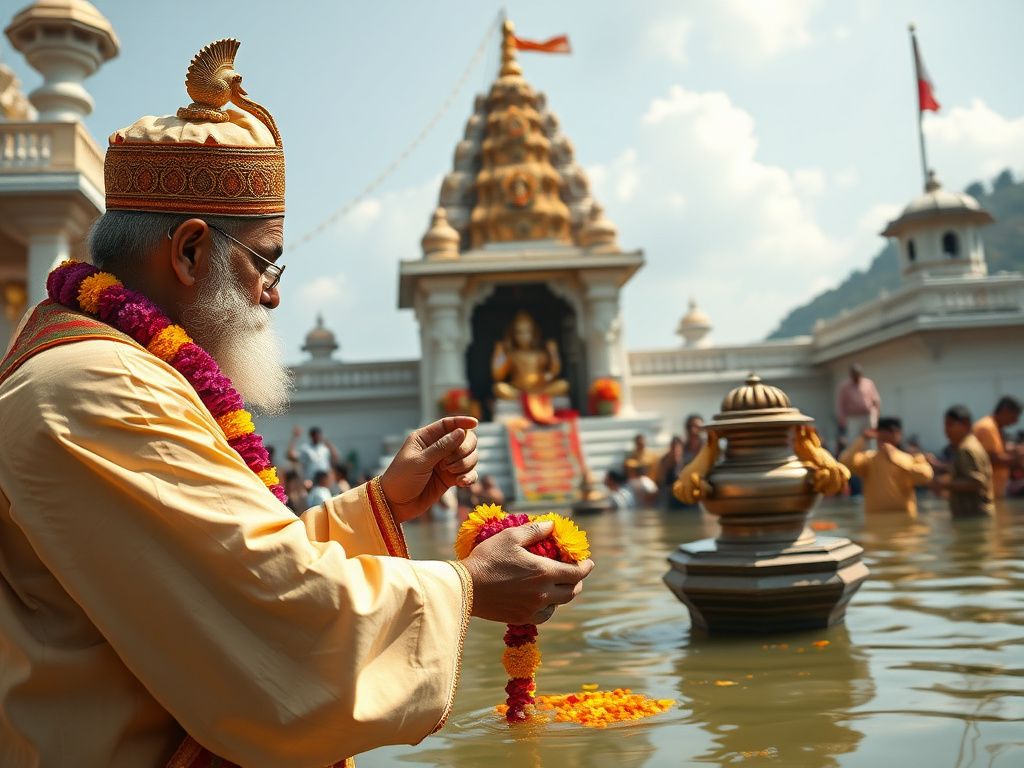
Pushpayagam (literally “flower sacrifice”) is a formal ritual at the Sri Bhu Varaha Swamy Temple on Tirumala, the ritually significant temple to Lord Vishnu’s Varaha avatar, located adjacent to the main Venkateswara temple. The ceremony is performed as a thanksgiving offering of flowers, marking the close of Salakatla Brahmotsavam. If I had to pick one thing that sets this ritual apart from the standard calendar of TTD sevas, it is the way Pushpayagam physically transforms the sanctum: every surface around the deity disappears beneath layered garlands and loose-flower arrangements, turning the shrine into a living garden for several hours. The ritual draws devotees who specifically include the Varaha temple in their Tirumala pilgrimage circuit.
Table of Contents
Sri Bhu Varaha Swamy Temple and Its Place in Tirumala
The Sri Bhu Varaha Swamy Temple is more than a side visit on the way to the main shrine. Vaishnava tradition holds that pilgrims must first seek the blessings of Varaha before proceeding to Sri Venkateswara. Varaha is Lord Vishnu’s third avatar, the divine boar who rescued the earth goddess Bhu Devi from the cosmic ocean, and the Tirumala temple honours him along with Bhu Devi.
Several features distinguish this temple within the Tirumala complex:
- By some accounts it predates the main Venkateswara temple
- It stands at the edge of the sacred Swami Pushkarini tank
- The presiding deity is Sri Bhu Varaha Swamy, Varaha holding Bhu Devi
- In the daily ritual order, the deity here receives the first naivedyam before the main temple
The path to the main Mahadwaram passes the Varaha temple, so most pilgrims complete this traditional pre-visit naturally. The practice is centuries old and remains one of the most widely observed customs on Tirumala hill.
What Pushpayagam Is
Pushpayagam belongs to the broader category of pushpa yagas, formal Vedic ceremonies in which flowers serve as the primary offering to the deity. In the context of the Varaha temple, it is the ritual of gratitude that closes the Salakatla Brahmotsavam festival. The idea is straightforward: the flowers represent devotees’ collective thanksgiving, offered through elaborate mantra cycles and priestly service rather than individual acts of worship.
The ceremony itself involves several elements:
- The Varaha Swamy deity is decorated with multiple layers of flower garlands
- Thousands of flowers, marigold, jasmine, lotus, and rose, are offered through specific mantra cycles
- Vedic homas (fire rituals) accompany the flower offerings
- Pushpa (flower) mantras are recited throughout
- The full ritual takes several hours to complete
- Sponsoring devotees are present to witness the elaborate flower decoration
The scale of the floral arrangement during Pushpayagam is visible even from the outer corridors of the temple. Priests work in coordinated sequences, and the Vedic chanting carries through the entire temple precinct.
The Significance of Flowers in This Ritual
Each flower used in Pushpayagam carries meaning within the Vaishnava tradition:
- Marigold, auspiciousness and prosperity; also practically durable under lamp heat
- Jasmine, purity and devotion; its fragrance is considered an offering in itself
- Lotus, divine perfection; the lotus grows in mud yet blooms without stain, a symbol central to Vishnu iconography
- Rose, love; used selectively at Vaishnava temples
- Tulasi leaves, always present, since Tulasi is considered sacred to Vishnu and essential to any Vaishnava offering
Pushpayagam combines all these in a single formal ceremony, which is part of why it reads differently from daily flower seva. The variety itself is a statement: every aspect of devotion, from purity to gratitude, is represented in the bouquet placed before the deity.
When Pushpayagam Takes Place
The primary Pushpayagam at the Varaha temple is an annual event tied directly to the Salakatla Brahmotsavam calendar. It falls after the festival concludes, typically the day after Dhwajavarohanam, the flag-lowering ceremony that formally closes Brahmotsavam. In some years, additional Pushpayagams are performed on other special occasions, including certain years of Navaratri Brahmotsavam or through donor-sponsored events.
Because the dates shift with the Telugu calendar each year, it is not possible to state a fixed calendar date in advance. For the current year’s Brahmotsavam closing schedule and the exact Pushpayagam date, check news.tirumala.org, TTD publishes official festival calendars and press releases there. Seva booking details, when applicable, appear on ttdsevaonline.com.
How to Attend
Attendance at Pushpayagam is free and open to all pilgrims visiting Tirumala on the day. There is no separate darshan token or paid entry for the public observance, devotees simply gather at the Varaha temple for the duration of the ritual. A few practical points:
- Sponsoring devotees may apply for Arjitha Pushpayagam Seva booking when TTD makes slots available; this gives them a designated place during the ceremony
- SVBC television may broadcast major Pushpayagam events live, which is useful for pilgrims who cannot reach the temple during the ritual
- The Varaha temple’s inner sanctum follows the standard photography rules: no photography inside, generally permitted in outer corridors
If your pilgrimage day coincides with Pushpayagam, a practical sequence works well: visit Sri Bhu Varaha Swamy Temple first as tradition requires, witness the Pushpayagam ritual if it is underway, then proceed to the main Sri Venkateswara temple for darshan. Returning to the Varaha temple later in the day lets you see the completed flower decoration before priests begin removing the garlands.
For travel planning, buses from Tirupati to Tirumala run through apsrtconline.in, and train bookings to Tirupati are available at irctc.co.in.
Pushpayagam and the Broader Festival Calendar
Some sources use “Pushpa Yagam” as a general term for flower-sacrifice rituals across Vaishnava temples. Tirumala’s annual Pushpayagam at the Varaha temple is the specific seasonal observance: it is not a generic category event but the named post-Brahmotsavam ritual tied to this temple’s liturgical calendar. This distinction matters when searching for information online, since general references to “pushpa yaga” may not describe the Tirumala Varaha-temple ceremony.
To be straight about the limits: exact operational details, precise timing within the day, whether a particular year includes donor-sponsored additional sessions, or any changes TTD makes to the ceremony’s schedule, can only be confirmed through TTD’s official channels. Neither this article nor any secondary source should be used to plan a pilgrimage without cross-checking current announcements.
Common Questions
Is Pushpayagam held every year? Yes, it is the formal post-Brahmotsavam ritual at the Varaha temple, performed annually after the Salakatla Brahmotsavam concludes.
Is there a ticket or fee to attend? No. Public attendance is free. Devotees wishing to sponsor the seva (Arjitha Pushpayagam) can check TTD’s seva booking channels for availability when that option is open.
Why must pilgrims visit Varaha before Venkateswara? Tradition holds that Varaha received the first ritual offering from Vishnu, since Varaha is an earlier earthly avatar. Vaishnava custom honours this by requiring devotees to seek Varaha’s blessings before approaching Venkateswara, a practice observed for centuries at Tirumala.
Is photography allowed during Pushpayagam? Outside the sanctum, generally yes. Inside the sanctum, photography is not permitted, as is standard across TTD temples.
Where do I find the exact date for this year’s Pushpayagam? TTD publishes festival calendars and announcements on news.tirumala.org. The Brahmotsavam closing schedule will show when Dhwajavarohanam falls, which determines the Pushpayagam date.
What flowers are used? Marigold, jasmine, lotus, rose, and Tulasi leaves are the core offerings. Thousands of flowers are used across the several-hour ceremony.
Can I see the decoration after the ritual ends? Yes. The flower decoration on the deity typically remains visible for a period after the ritual concludes. Returning to the Varaha temple later in the day after completing Venkateswara darshan is common among pilgrims who attend Pushpayagam.
Related Reading
- Salakatla Brahmotsavam Master
- Dwajarohanam, Flag Hoisting
- Chinna Sesha Vahanam
- Kalpavruksha Vahanam
- Sarva Bhoopala Vahanam