
<!–
Target: /dress-code/
Sources:
– https://news.tirumala.org/introduction-of-traditional-dress-code-to-ttd-employees/
– https://news.tirumala.org/traditional-dress-code-and-tirunamam-enhances-spiritual-ecstasy-in-svv/
– https://news.tirumala.org/rs-300-special-entry-darshan-inadvance-booking-to-commence-from-august-27-tirumala-jeo/
–>
Table of Contents
Tirumala Dress Code, What’s Mandatory, What’s Allowed, What’s Banned
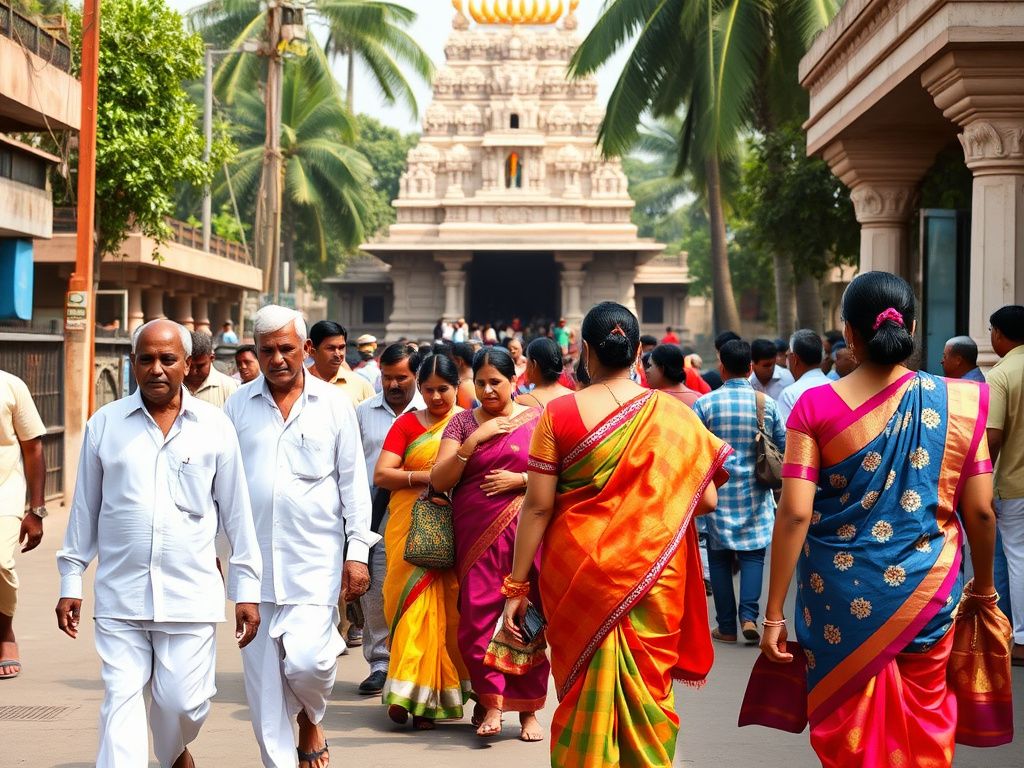
TTD enforces a traditional dress code for all darshan categories at the Tirumala temple. Men must wear dhoti / pyjama or kurta with shirt; women must wear saree, half-saree, or chudidar with dupatta. Jeans, shorts, t-shirts, and skin-tight clothing are not permitted in the queue lines for Special Entry Darshan, Arjitha Sevas, or VIP Break Darshan. The rule is checked at queue entry; pilgrims out of dress code are turned back without refund.
The rule in detail, men
Acceptable attire for the main darshan and Arjitha Sevas:
- Dhoti (panche) with shirt, most common combination
- Pyjama with kurta
- Kanduva and panche, traditional South Indian style
For specific sevas like Suprabhata Seva or Kalyanotsavam, the dress code is stricter, typically dhoti only with angavastram (no kurta). The seva-specific requirement is enforced at the Supadam Q entry gate.
Not permitted: shorts, jeans, half-pants, t-shirts, sleeveless vests, lungis (the lungi is not considered formal dhoti for temple entry), skin-tight pants of any kind.
The rule in detail, women
Acceptable attire:
- Saree with blouse, traditional, most common
- Half-saree with blouse (langa voni), typical for younger girls and unmarried women
- Chudidar / salwar kameez with dupatta or pallu, dupatta covering the chest is compulsory
For specific sevas (Kalyanotsavam, Suprabhata), the requirement narrows to saree with blouse only, chudidar is not permitted for these specific sevas.
Not permitted: jeans, leggings worn alone, skirts, midis without dupatta, sleeveless tops without a covering, skin-tight clothing.
What about children
Boys below 12, relaxed enforcement. Shorts and t-shirts are typically allowed for young boys. Above 12, the adult male rules apply.
Girls below 12, relaxed for very young children. From about age 10 onwards, the saree / chudidar with dupatta rule is enforced.
Where the dress code is enforced
- Supadam Q entry gate, for Special Entry Darshan, Arjitha Sevas, VIP Break Darshan
- Vaikuntam Queue Complex (VQC) entry, for SSD token darshan and open Sarva Darshan, somewhat looser enforcement but the same rule
- Bangaru Vakili (golden door) area, strict enforcement for sevas inside the temple
- Kalyana Vedika and Purohit Sangam, for Annaprasana, ear piercing, and other samskara rituals
The free Sarva Darshan queue is sometimes treated more leniently, pilgrims in ordinary clothes are not always turned away at the open Sarva Darshan compartments. But the temple sanctum entry, paid darshan and seva entries strictly enforce.
If you arrive without traditional attire
- Vendor stalls operate near the Vaikuntam Queue Complex, the Supadam Q gate, and around the temple perimeter. They sell ready-made dhotis, sarees and angavastrams in cotton and synthetic blends.
- Tirupati city also has many stalls and shops within walking distance of the bus stand and railway station, buy here if you have more time, before climbing to Tirumala.
- Some TTD accommodation complexes (Srinivasam, Madhavam) have small shops or vendor desks inside the complex selling temple attire.
Price expectations: a standard cotton dhoti is Rs. 150 to Rs. 300; a saree is Rs. 300 to Rs. 1,000 depending on quality; a chudidar with dupatta is Rs. 250 to Rs. 600.
What about footwear
Footwear is not permitted inside the temple. Cloak rooms with free footwear deposit are at the Vaikuntam Queue Complex entrance, the Supadam Q gate, and the main Mahadwaram. Receive a numbered token; reclaim shoes after darshan.
Walking from your accommodation block to the temple footwear deposit, you may wear shoes; remove only at the temple deposit counter.
What about jewellery
Personal jewellery is generally allowed during darshan. Loud or ostentatious jewellery may attract attention; modest and traditional ornaments are appropriate. For specific sevas like Angapradakshinam, all jewellery must be removed.
Phones, cameras, and electronic gadgets are not permitted in the queue or temple. Lockers and cloak rooms are available for storage.
Common questions
Can I wear formal Western clothes (trousers and shirt) for darshan? For open Sarva Darshan, generally tolerated. For Rs. 300 Special Entry Darshan and any paid seva, the traditional dress code is enforced. To be safe, wear traditional attire, the cost is low and the rejection risk is real.
Are kurta-pyjama OK for Special Entry Darshan? Yes for the standard Rs. 300 Special Entry Darshan. For specific Arjitha Sevas like Suprabhata or Kalyanotsavam, dhoti is required, not kurta-pyjama. Check the seva-specific rule.
What about NRI / foreign pilgrims who don’t have traditional attire? Buy at the vendor stalls in Tirupati or at the temple perimeter. TTD does not waive the dress code for foreigners.
Are the dress code rules the same at Tiruchanoor and other TTD temples? Similar but slightly less strict at the smaller TTD temples (Padmavathi Ammavari, Govindaraja Swamy, etc.). The Tirumala main temple is the strictest.
Can I change clothes near the temple if needed? Yes. Public changing rooms and free toilets are available near the Vaikuntam Queue Complex entrance.
For the current TTD dress code rules and any policy updates, only use ttdevasthanams.ap.gov.in and news.tirumala.org.
Related Articles
- Tirumala Toll Gate Timings
- Dharma Ratham Free Bus
- APSRTC Darshan Packages
- Mobile Phone Storage at Tirumala
- Footpath Routes (Alipiri vs Srivari Mettu)

1 comment
Rooms booking