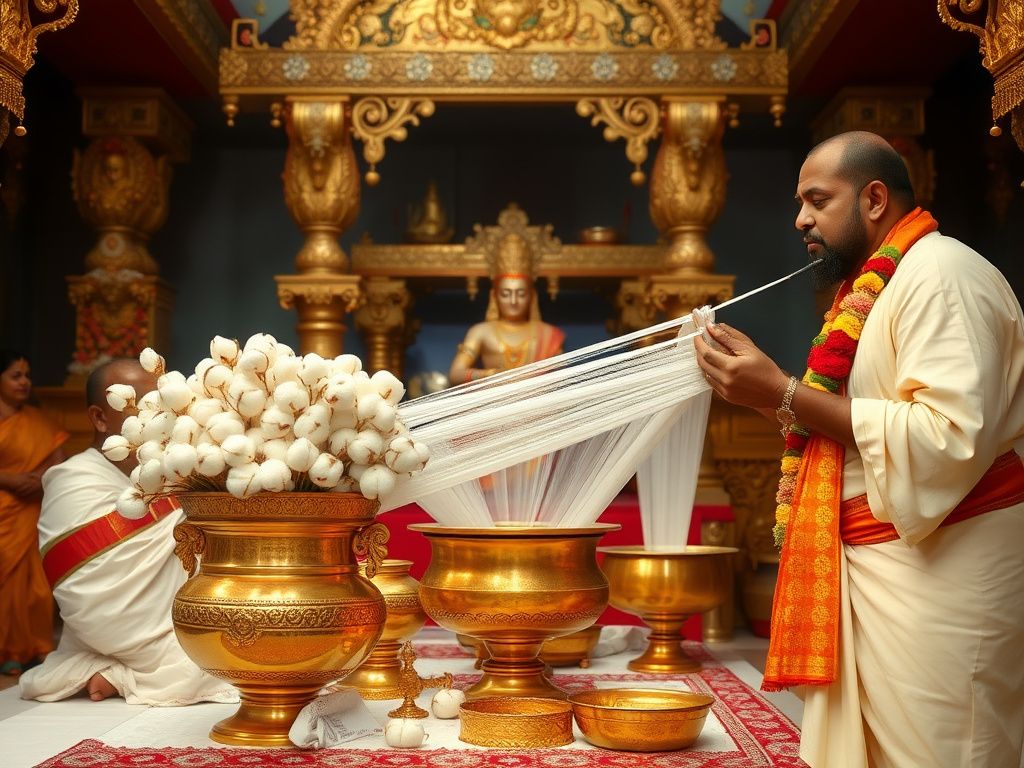
Pavithrotsavam is one of the lesser-known yet deeply significant annual observances at Tirumala. Held during the month of Sravana (August–September), this three-day festival is dedicated entirely to purification, of the temple space, its presiding priests (archakas), and the devotees who sponsor the rituals. Far from being a celebratory spectacle, it is a quiet, inward-facing ceremony rooted in the Agama tradition’s understanding that even the most carefully conducted worship can carry inadvertent lapses over the course of a year. Pavithrotsavam exists precisely to correct those lapses and restore the temple’s ritual integrity before the grand Salakatla Brahmotsavam of September–October.
The ticket cost is Rs. 200 per person, and booking is done through TTD’s online portal. For confirmed dates ahead of your visit, check news.tirumala.org, which publishes the official TTD calendar each year.
Table of Contents
What the word means and why it matters
The name breaks cleanly into two Sanskrit roots. Pavithram means “sacred thread” or, more broadly, “purifier.” Utsavam means “festival.” Together, Pavithrotsavam translates as the “Festival of Purification through Sacred Threads.” The pavithram itself is a slender thread woven from raw cotton and consecrated through Vedic mantras. In the Pancharatra Agama system, the doctrinal framework that governs worship at Tirumala, it is understood that ritual acts accumulate small imperfections over time: a mispronounced syllable, a moment of inattention, a procedural shortcut taken under pressure. These are not considered moral failures but technical errors in a precise ritual science. Pavithrotsavam provides an annual mechanism to acknowledge and correct them collectively.
In practice, this makes the festival one of the most theologically rigorous events in the Tirumala calendar, precisely because its purpose is maintenance rather than celebration. The temple is not marking a mythological anniversary or a cosmic event; it is performing housekeeping at the highest ritual level.
The Agama tradition behind the festival
The Pancharatra Agama texts that guide TTD’s ritual schedule are explicit about the need for periodic purification. Temples operating under these texts are expected to conduct a pavithrotsavam annually, with the timing ideally falling before the major annual festival of that temple. At Tirumala, the Brahmotsavam, the largest of all annual events, follows in September or October, making Sravana the natural window for purification. The sequence is deliberate: a spiritually clean temple, served by ritually renewed priests, enters the Brahmotsavam with its full integrity intact.
The pavithram thread plays a central role in this logic. When consecrated and offered to Lord Venkateswara, it symbolically absorbs the accumulated ritual impurities and then carries them away. When distributed to devotees and archakas, it confers a share of that purification on the recipients. This is why the thread received as prasadam at the end of the festival is considered especially auspicious, it is not merely a souvenir but a ritual instrument that has completed its function within the temple.
How the three days unfold
The festival follows a structured arc across its three days, moving from preparation through culmination to distribution.
- Day 1: Preparation and initial purification rituals. The pavithram threads are prepared from raw cotton through a formal weaving and consecration process. Preliminary purification ceremonies are conducted within the temple precincts to ready the space for what follows.
- Day 2: The main offering day. The consecrated threads are formally presented to Lord Venkateswara in the sanctum, and then tied on the archakas as a mark of renewed ritual purity. Homas, fire rituals, are performed for broader cosmic purification, with oblations offered to Vedic fire as a further corrective to accumulated errors.
- Day 3: The concluding ceremonies. The threads, having been offered to the deity and worn by the priests, are distributed to the sponsoring devotees as prasadam. A closing aarti marks the formal end of the festival. Devotees who receive the pavithram thread may wear it as a sacred amulet or place it at a home pooja altar, where it is considered auspicious for the remainder of the year.
Practical guidance for pilgrims
Attendance at Pavithrotsavam requires advance planning. The quota for participation is released on the first Friday of the month for slots in the following month. Since the festival falls in August, bookings typically open in July. Tickets are priced at Rs. 200 per person per day and can be booked online at ttdevasthanams.ap.gov.in or through ttdsevaonline.com. Slots fill quickly, so logging in promptly when the quota releases is advisable.
Worth flagging: dress code enforcement at Tirumala sevas is strict, and Pavithrotsavam is no exception. Men must wear a dhoti and angavastram; women are expected in a saree with blouse. Pilgrims should report at the Supadam Q gate at least one hour before the scheduled seva time. Late arrival may result in denial of entry regardless of ticket status.
For travel to Tirumala, pilgrims arriving by train can check schedules and book at irctc.co.in. Bus services from Tirupati and other Andhra Pradesh cities can be booked at apsrtconline.in.
Significance for sponsoring devotees
Beyond the archakas and the temple administration, lay devotees can sponsor participation in Pavithrotsavam. This is considered one of the more meritorious acts of seva available at Tirumala, because the sponsor is not merely attending a ritual but actively supporting the temple’s renewal. The pavithram thread received as prasadam at the conclusion of the festival carries a direct spiritual connection to the purification ceremony itself. Families who attend report that the quiet, inward-looking atmosphere of the festival is markedly different from the larger and more publicly festive sevas, it has the character of collective prayer more than public spectacle.
Common questions
When exactly does Pavithrotsavam fall each year? It falls during the month of Sravana, which corresponds to August or early September in the Gregorian calendar. The precise dates shift each year according to the Hindu lunar calendar. TTD announces confirmed dates on news.tirumala.org well in advance of the festival.
What is the ticket cost for Pavithrotsavam? The current cost is Rs. 200 per person per day. This figure comes from the source and reflects TTD’s published rate; confirm current pricing when booking online.
How do I book participation? Booking is done through TTD’s online portal at ttdevasthanams.ap.gov.in or ttdsevaonline.com. The quota for August is typically released on the first Friday of July.
Are children permitted to attend? Yes, children may attend with their own ticket purchased at the standard rate.
What should I do with the pavithram thread I receive? Wear it as a sacred amulet or place it at a home pooja altar. It is considered auspicious throughout the year following the festival.
What is the dress code? Men must wear a dhoti and angavastram. Women must wear a saree with blouse. Pilgrims in non-traditional attire will not be permitted entry.
Why is Pavithrotsavam held before the Brahmotsavam? The Pancharatra Agama tradition requires the temple to enter its principal annual festival in a state of full ritual purity. The Pavithrotsavam achieves this by correcting any lapses accumulated during the year, so the Brahmotsavam begins on a clean foundation.
Related reading
- Salakatla Brahmotsavam, dates, full schedule, and significance
- Dwajarohanam, Flag Hoisting at Tirumala
- Chinna Sesha Vahanam
- Kalpavruksha Vahanam at Tirumala
- Sarva Bhoopala Vahanam at Tirumala