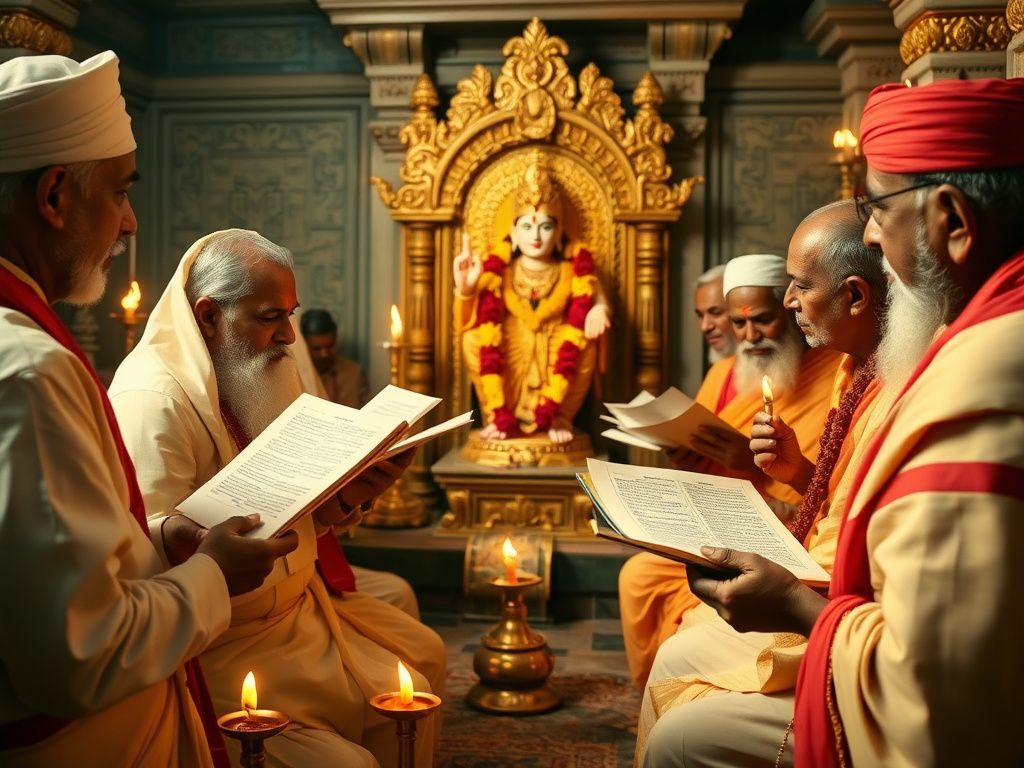
Adhyayanotsavam is one of the most spiritually significant festivals in the Tirumala calendar: a festival of sacred recitation, when the Tamil Divya Prabandham (the 4,000 verses composed by the twelve Alwar saints) is ceremonially chanted before Lord Venkateswara over a cycle of days. Observed during Margashira (Dhanurmasam, December-January), Adhyayanotsavam celebrates the devotional poetry that forms the living heart of the Sri Vaishnava tradition.
Table of Contents
What is Adhyayanotsavam
The word adhyayana means study or recitation; utsavam means festival. Adhyayanotsavam is the festival during which the Nalayira Divya Prabandham, the collected Tamil hymns of the Alwars, is recited in full before the deity over a series of days. It is also known by its two phases: Pagal Pathu (ten days of daytime recitation) and Ra Pathu (ten days of night-time recitation). Together, these twenty days form the complete recitation cycle, with the sacred Vaikunta Ekadasi falling within the festival period.
The recitation is performed by designated Adhyapakas, trained reciters who sing the Prabandham before the processional deity in the traditional melodies preserved through generations of practice. The entire exercise is understood not merely as performance but as an act of direct worship: the words of the Alwars offered back to the Lord they composed them for.
The Alwars and the Divya Prabandham
The Alwars were twelve Tamil saint-poets, broadly dated to the period between the 5th and 9th centuries CE, whose entire lives were devoted to composing and singing hymns in praise of Lord Vishnu and His various forms. Their collected works form the Nalayira Divya Prabandham, where nalayira means four thousand, divya means divine, and prabandham means composition or collection.
The Prabandham is revered in the Sri Vaishnava tradition as the Dravida Veda, or Tamil Veda, held on par with the Sanskrit Vedas in terms of its sanctity and the spiritual benefit conferred by its recitation. This is not a casual parallel: in Sri Vaishnava temples, the Divya Prabandham is chanted alongside Sanskrit Vedic recitations during worship, giving the Tamil devotional tradition equal standing in ritual practice.
The Alwars include figures such as Nammalwar, whose Tiruvaimozhi forms the most celebrated section of the Prabandham; Andal, the only woman among the twelve; and Kulasekara Alwar, among others. Their backgrounds were diverse, spanning different communities and regions, and their common thread was an all-consuming devotion to Vishnu.
Significance of Adhyayanotsavam
- Honouring the Alwars: The festival is an act of collective veneration for the saint-poets whose hymns shaped and preserved Sri Vaishnava devotion across centuries.
- The Tamil Veda in practice: The Divya Prabandham is recited with the same ceremonial care as the Sanskrit Vedas, making Adhyayanotsavam a living demonstration of this equivalence.
- Margashira sanctity: The Dhanurmasam month is considered especially dear to Lord Vishnu in the Vaishnava calendar, lending additional weight to the recitations performed during this period.
- Vaikunta Ekadasi connection: The festival encompasses Vaikunta Ekadasi, the most sacred single day in the Tirumala year, when the Vaikunta Dwaram (heavenly gateway) is opened and darshan on that day is believed to confer liberation.
How Adhyayanotsavam is observed
During the festival, the processional deity is taken through the temple and the four mada streets, with the Adhyapakas reciting the appropriate sections of the Prabandham at each stage. Special alankarams (decorations) are given to the deity on different days, with some days corresponding to the celebration of specific Alwars or specific sections of the hymns.
Pagal Pathu (daytime recitation) and Ra Pathu (night-time recitation) together ensure the entire Prabandham cycle is completed within the festival. The conclusion of the Ra Pathu on the final day marks the formal end of Adhyayanotsavam. The festival draws devotees who come specifically to listen to the Prabandham being recited, an experience quite different from the usual darshan visit.
Honestly, for a devotee interested in the intellectual and poetic depth of the Sri Vaishnava tradition rather than only the temple’s ritual grandeur, Adhyayanotsavam is the single festival most worth planning a Tirumala visit around.
Visiting during Adhyayanotsavam
The Dhanurmasam period (December-January) sees significant crowds at Tirumala, partly because Vaikunta Ekadasi falls within it and draws very large numbers of pilgrims. Darshan queues during Vaikunta Ekadasi itself are among the longest of the year. Pilgrims who want to attend Adhyayanotsavam without the Ekadasi crowds may find the Pagal Pathu or Ra Pathu days outside the Ekadasi date more manageable in terms of queue times.
To set expectations, the exact dates of Adhyayanotsavam, Pagal Pathu, Ra Pathu, and Vaikunta Ekadasi vary by the lunar calendar each year. Confirm the current year’s schedule via news.tirumala.org before planning travel, since the dates shift noticeably from year to year.
Common questions
What is recited during Adhyayanotsavam? The Nalayira Divya Prabandham: the 4,000 Tamil verses composed by the twelve Alwar saints.
When is it held? During Margashira / Dhanurmasam (December-January), encompassing Vaikunta Ekadasi. Exact dates change with the lunar calendar each year.
What are Pagal Pathu and Ra Pathu? Ten days of daytime recitation (Pagal Pathu) and ten days of night-time recitation (Ra Pathu), together completing the full recitation cycle of the Divya Prabandham.
Who were the Alwars? Twelve Tamil saint-poets devoted to Vishnu, broadly active between the 5th and 9th centuries CE, whose collected hymns form the Divya Prabandham.
Why is the Divya Prabandham called the Tamil Veda? Because the Sri Vaishnava tradition holds it on par with the Sanskrit Vedas in sanctity; it is recited alongside Sanskrit Vedic chanting in temple worship.
Is Vaikunta Ekadasi part of Adhyayanotsavam? Yes. Vaikunta Ekadasi falls within the Adhyayanotsavam period and is the most attended single day of the festival.
Where can I confirm the dates for this year? Check news.tirumala.org or tirumala.org for the current year’s festival calendar.