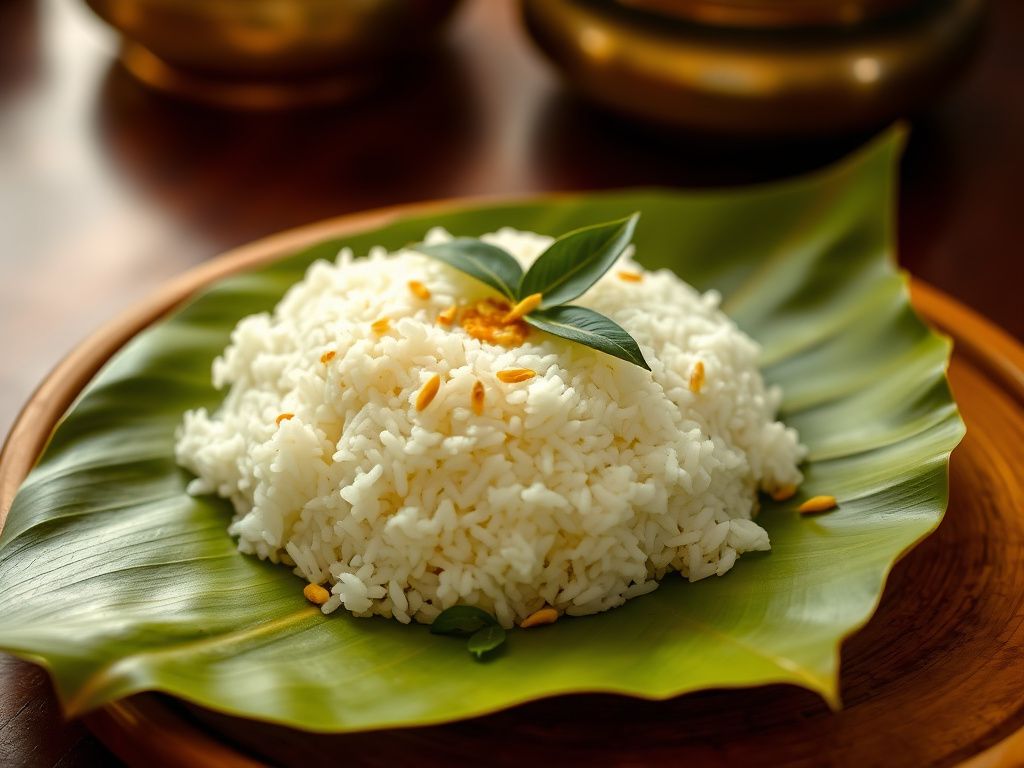
Daddojanam, the temple-style curd rice, is one of the most cherished prasadams distributed at Tirumala. Cooling, mildly tempered, and deeply satisfying, daddojanam holds a place of importance among the food offerings (naivedyam) made to Lord Venkateswara. For countless devotees, a serving of daddojanam after darshan is among the most quietly memorable parts of the pilgrimage.
Table of Contents
What is Daddojanam
Daddojanam is the Sanskrit and temple term for curd rice: dadhi means curd, and odana means cooked rice. The temple preparation combines freshly cooked rice with curd, and is gently tempered with mustard seeds, curry leaves, green chillies, ginger, and sometimes cashews and pomegranate seeds. It is mild and cooling — a sattvic (pure) food considered ideal for offering to Vishnu.
The preparation is deliberate in its simplicity. Unlike the elaborate spicing of many South Indian dishes, daddojanam is intended to be unobtrusive and calming to the palate. This character makes it, across South Indian tradition, the food with which a meal is completed: not a centrepiece, but a quiet close.
Significance as naivedyam
In the theology of temple worship, naivedyam is not merely food prepared for distribution. It is an offering made to the Lord, who is understood to accept it before it is given to devotees as prasadam. The qualities of daddojanam make it particularly suited to this role:
- Sattvic nature: Curd rice is cooling and calming, aligned with the sattvic qualities (purity, clarity, calm) that characterise offerings made to Vishnu.
- Cooling quality: Especially valued in the warm climate of Tirupati and Tirumala, where pilgrims arrive after long journeys or after climbing the hills; the prasadam is literally refreshing.
- Meal completion: In South Indian tradition, a meal concludes with curd rice because it settles the digestive system and closes the meal gently. As naivedyam, the daddojanam thus symbolically completes the Lord’s meal offering.
- Daily ritual cycle: Daddojanam features among the regular food offerings in the temple’s naivedyam schedule.
The way I see it, daddojanam is the prasadam that best captures what the Tirumala pilgrimage is actually like for most people: not dramatic, but quietly sustaining, something you receive after a long wait and which turns out to be exactly what you needed.
Where devotees receive Daddojanam
Daddojanam is available to devotees through more than one channel at Tirumala:
- As naivedyam prasadam after certain sevas, where it may be distributed to participants.
- As part of the free Annaprasadam (Annadanam) meals served at the TTD dining halls, where daddojanam is a regular component of the meal.
A fair warning: the specific availability of daddojanam as a standalone prasadam item versus as part of the Annaprasadam meal can vary, and the temple’s prasadam offerings are subject to change. For current prasadam availability and distribution details, refer to tirumala.org.
The family of Tirumala prasadams
Daddojanam sits alongside the other well-known Tirumala prasadams, each with its own character and occasion. The famous Srivari Laddu is the most recognised, distributed as a ticketed prasadam and prized across the country. Pulihora (tamarind rice) is tangy and savoury, offered during certain festivals. Chakkera Pongali (sweet pongal) and vada round out the main prasadam offerings of the temple kitchen (Potu), one of the largest institutional kitchens in the world by volume.
Together these prasadams reflect the range of the naivedyam tradition: sweet, sour, savoury, and cooling tastes are all represented, as if to offer the Lord a complete and balanced meal. Daddojanam’s place in this family is as the calming finish, the one that brings the meal and the prasadam experience to a gentle close.
The Annaprasadam tradition at Tirumala
TTD serves free meals to hundreds of thousands of pilgrims each year through the Annaprasadam scheme. The meals are simple, nourishing, and prepared in the same spirit as the naivedyam offered to the Lord. Daddojanam is typically part of this meal. For pilgrims who have been waiting in queue for many hours, sitting down to an Annaprasadam meal that includes curd rice is a practical comfort as much as a devotional one.
Common questions
What is daddojanam? Temple-style curd rice: cooked rice mixed with fresh curd and gently tempered with mustard seeds, curry leaves, green chillies, and ginger.
Why is it offered to the Lord? Curd rice is a sattvic (pure), cooling food considered ideal naivedyam for Vishnu, and it occupies the traditional closing position in a South Indian meal.
Where do I receive it at Tirumala? As naivedyam after certain sevas and as part of the free Annaprasadam meals served at TTD dining halls.
Is it spicy? No. It is mild and cooling, with only a gentle tempering; the emphasis is on the soothing quality of the curd rice rather than bold seasoning.
Why is curd rice eaten last in a South Indian meal? It is considered cooling and digestive, and eating it at the end of a meal is believed to settle the stomach and complete the meal in a balanced way.
Is there a fee for Annaprasadam? The Annaprasadam scheme offers free meals to pilgrims. Details on eligibility and serving times can be confirmed at tirumala.org.
Related reading
- Pulihora at Tirumala, Tamarind Rice Prasadam
- Tirumala Srivari Laddu, Complete History
- Tirumala Annaprasadam, Free Meal Distribution