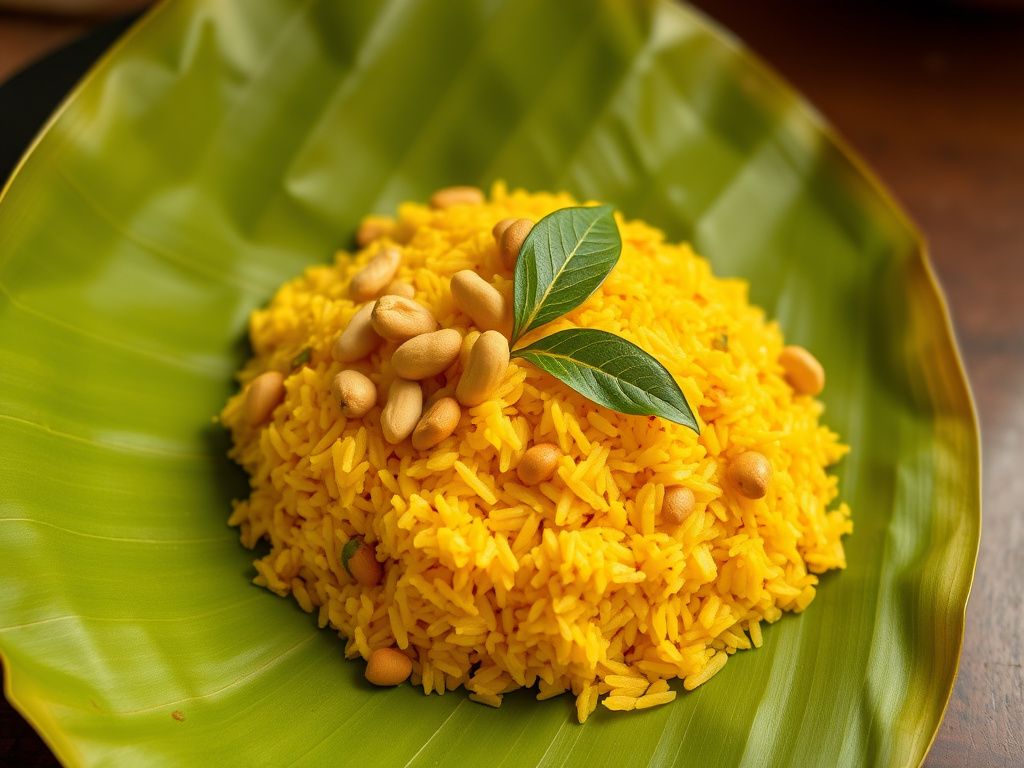
The golden laddu draws most of the attention when pilgrims discuss Tirumala prasadam, but devotees who attend sevas or sit down for the temple’s Annaprasadam meals encounter another offering that carries its own devoted following: Pulihora, the tamarind rice. With its distinctively sour-savoury character, deep golden turmeric colour, and the crunch of peanuts and popped mustard seeds, Pulihora is one of the oldest and most theologically grounded naivedyams in the South Indian Vaishnava tradition. Understanding why it is offered, and what makes the temple version significant, adds a layer of meaning to receiving it.
Table of Contents
What Pulihora is
Pulihora, also called puliyodarai or tamarind rice, is cooked rice mixed with a tempered paste built around tamarind. The tempering typically includes mustard seeds, dried red chillies, curry leaves, peanuts or roasted chana, turmeric, and asafoetida. The tamarind paste carries the sour base; turmeric provides the colour and mild bitterness; the tempering adds heat and crunch. The word “puli” means tamarind or sour in South Indian languages, and the dish is found across the temples of Andhra Pradesh, Tamil Nadu, and Karnataka as a standard Vishnu naivedyam.
The result is a rice that is tangy, savoury, and mildly spiced, with a texture layered by the fried elements in the tempering. The South Indian naivedyam tradition values balance across tastes, and pulihora represents the sour-salty dimension of that balance in its most classical form.
Significance as prasadam
- An ancient naivedyam tradition: Tamarind rice has been offered to Lord Vishnu in South Indian temple contexts for centuries; its presence in the naivedyam cycle reflects deep liturgical continuity
- Practical sanctity: Pulihora keeps well without refrigeration for longer than most cooked rice preparations. The tamarind’s natural acidity slows spoilage, which made it historically ideal as travel prasadam for pilgrims who needed to carry the offering home across long journeys
- Balance of tastes: The combination of sour, salty, and gently spiced reflects the Shastraic understanding of a balanced offering, one that satisfies rather than overwhelms a single flavour register
- Daily offering cycle: Pulihora features among the regular food offerings in the temple’s naivedyam schedule, making it a recurring presence in the devotional life of the shrine rather than an occasional festival food
Where devotees receive Pulihora at Tirumala
- As naivedyam prasadam distributed during or after certain sevas. The specific sevas vary; confirm which ones include pulihora distribution at tirumala.org
- As part of the Annaprasadam meals distributed daily at TTD’s free meal halls
- Occasionally in packaged form as part of prasadam distribution at the temple counters, valued for its keeping quality
In practice, the seva-based distribution is the most direct way to receive pulihora as a formal prasadam rather than as part of a general meal. Pilgrims who book Arjitha Sevas through ttdsevaonline.com are more likely to receive naivedyam prasadams including pulihora as part of the seva experience.
Why the temple version is distinctive
Temple pulihora at Tirumala differs from home preparations in a few ways. The tamarind paste is prepared in quantity using methods refined over generations of temple cooks, and the rice-to-paste ratio follows the Pottu (temple kitchen) standard. More significantly, receiving it as prasadam means it arrives already offered to the Lord, which is the theological point that distinguishes temple food from ordinary food.
Other Tirumala prasadams in the same family
Pulihora belongs to a group of Tirumala prasadams distributed across different contexts:
- Laddu: the GI-tagged sweet made in the Pottu kitchen, the most widely distributed prasadam
- Daddojanam: curd rice, mild and cooling, given after certain sevas
- Chakkera Pongali: sweet pongal made from rice and jaggery, a festival and seva offering
- Vada: the savoury lentil preparation offered during specific poojas
- Pulihora: tamarind rice, the sour-savoury complement to the sweeter offerings
Together these cover the main flavour categories of the South Indian naivedyam tradition, each with its own place in the temple’s daily and seasonal offering cycle.
Practical notes for pilgrims
Pulihora keeps well after distribution, typically for several hours at room temperature and longer if kept cool. This makes it suitable to carry and share with family members who were not present for the seva. One practical limitation: specific seva-based prasadam distribution at Tirumala is subject to change by TTD; the prasadam you receive with a given seva may vary depending on the day, season, and temple schedule. Do not plan a visit specifically to receive pulihora on any particular day without first confirming current naivedyam arrangements through TTD’s official sources.
The free Annaprasadam halls are the most reliable way to taste pulihora during any Tirumala visit, as the meal spread includes it alongside the other standard items on most days.
Common questions
What is pulihora made of? Rice, tamarind, turmeric, mustard seeds, dried red chillies, curry leaves, peanuts or roasted chana, and asafoetida. The ingredients are consistent across temple and home preparations, though proportions and technique vary.
Why is tamarind rice offered to Vishnu? Pulihora is a classical naivedyam in the South Indian Vaishnava tradition, valued for its flavour balance and for the practical quality of keeping well without refrigeration, both features that have made it a long-standing temple offering.
Where do I get pulihora at Tirumala? As naivedyam after certain Arjitha Sevas, and as part of the free Annaprasadam meals distributed daily in TTD’s meal halls.
Does it keep well? Yes. The tamarind base acts as a natural preservative, keeping the rice fresh longer than plain cooked rice. Historically this made it ideal for pilgrims travelling long distances home after receiving prasadam.
Is pulihora spicy? Mildly. The heat from dried red chillies is present but not dominant; the predominant flavours are sour from tamarind and savoury from the tempering.
How does pulihora differ from the laddu? The laddu is a sweet prasadam, GI-tagged and sold at the counter. Pulihora is a savoury rice prasadam, distributed primarily through seva naivedyam and the Annaprasadam halls rather than sold. They serve different moments in the prasadam experience.
Is Annaprasadam truly free? Yes. TTD provides free vegetarian meals to all pilgrims at the Annaprasadam halls at Tirumala. No ticket or payment is required for the meal itself, though the queues can be long during peak periods.
Related reading
- Tirumala Srivari Laddu: Complete History
- Tirumala Annaprasadam: Free Meal Distribution
- Complete List of Tirumala Daily Sevas