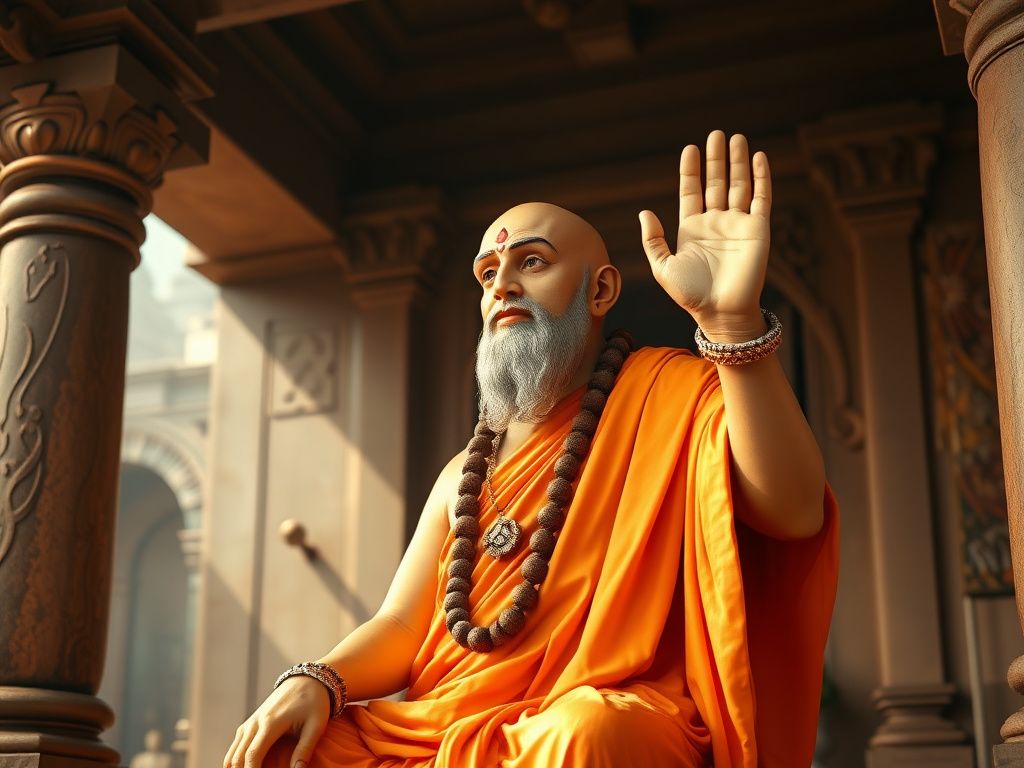
Sri Ramanujacharya (traditionally dated 1017–1137 CE) occupies a singular place in the history of Tirumala. The great philosopher-saint of the Sri Vaishnava tradition did not merely visit the temple; according to tradition, he fundamentally reshaped how worship was conducted there, who it served, and what doctrinal identity the temple would carry forward. The rituals pilgrims experience today, from the pre-dawn Suprabhatam to the late-night Ekanta Seva, bear his fingerprints. Understanding his contribution gives the pilgrimage an entirely different depth.
Table of Contents
Who was Sri Ramanujacharya
Ramanuja was the foremost acharya (teacher) of the Sri Vaishnava sampradaya. He systematised the philosophy known as Vishishtadvaita, or qualified non-dualism. This view holds that the individual soul and the material universe are both real, but that they exist as the body of the Supreme Lord Vishnu (also called Narayana), who is their inner self. The soul is not identical to Brahman in an absolute sense, nor completely separate from it; the relationship is one of inseparable unity within distinction.
Ramanuja emphasised two complementary paths to liberation: bhakti (devotional practice) and prapatti (total self-surrender to the Lord). Crucially, he taught that these paths are accessible to all, regardless of caste, gender, or social standing. This inclusive theological position had enormous practical consequences for the institutions he helped shape.
His contributions to Tirumala
The traditions connecting Ramanuja to Tirumala are detailed in Sri Vaishnava hagiographic sources. Scholars continue to examine the exact historical record, but the broad outlines of his influence are not in dispute within the tradition. His contributions are generally understood to include:
- Systematising worship along Pancharatra Agama lines: Ramanuja is credited with organising the temple’s daily ritual sequence according to the Pancharatra Agama texts, which govern the worship of Vishnu in his divine form. This provided the structured seva schedule that still operates today.
- Establishing administrative structures: He helped define the roles and responsibilities of those serving the Lord, creating an organised framework for the temple’s management.
- Affirming the deity’s identity: Tradition holds that Ramanuja settled a theological debate of his time by affirming the presiding deity as the form of Lord Vishnu/Narayana, an affirmation that anchored Tirumala firmly within the Vaishnava tradition.
- Reinforcing the Sri Vaishnava presence: His work transformed Tirumala into one of the principal centres of Sri Vaishnava devotion across South India.
The Pancharatra Agama and the daily seva sequence
The Pancharatra Agamas prescribe the worship of Vishnu in temple settings: the timing and form of each ritual, the bathing and adorning of the deity, and the distribution of prasadam. Ramanuja applied these texts systematically to Tirumala, replacing or supplementing earlier, less formalised practices.
The result is a daily cycle running from the early morning waking of the Lord (Thiruvanandal) through multiple darshan timings, afternoon rest, evening Sayanotsavam, and the Ekanta Seva at night. Each segment has a character, a purpose, and a prescribed form rooted in the Agamic tradition.
The lasting legacy
Ramanuja’s influence at Tirumala endures across several dimensions:
- The daily ritual sequence from Suprabhatam through Ekanta Seva follows Agamic tradition he helped formalise
- The primacy of prapatti as the path open to all devotees shapes the temple’s inclusive ethos
- The open-to-all character of darshan and the free Annaprasadam reflect the spirit of his inclusive theology
- The Sri Vaishnava acharya lineage is honoured within the broader Tirupati-Tirumala temple network
Ramanuja and the inclusive message
One of the most celebrated episodes in Ramanuja’s life describes his climbing to the top of the Thirukoshtiyur temple gopuram and proclaiming aloud the Ashtakshara Mantra (Om Namo Narayanaya) so that the assembled crowd below could hear and receive it. By tradition, he was warned by his own guru that revealing this sacred mantra publicly would cost him spiritually. His response was characteristic: if even one soul among the crowd attained liberation through hearing it, the cost was worth paying. This episode captures the inclusive spirit that defined his teaching and that continues to define the open, come-as-you-are character of Tirumala darshan. Anyone, from any background, may approach the Lord here.
If I had to pick one thing that makes studying Ramanuja valuable for a Tirumala pilgrim, it is the realisation that the doors of the temple being open to all is not an administrative accident but a deeply held theological commitment, centuries old.
Worth flagging: the traditional dates of Ramanuja’s life (1017–1137 CE, making him 120 years old at death) are accepted within the Sri Vaishnava tradition but are discussed by scholars of Indian history. The fact of his profound influence on Tirumala is separate from this dating question and is not in dispute.
Common questions
What philosophy did Ramanuja teach? Vishishtadvaita, or qualified non-dualism. The individual soul and universe are real but exist as the body of Vishnu/Narayana, who is the inner self of all. Devotion and surrender are the paths to liberation.
What exactly did he contribute to Tirumala? He is credited with systematising worship along Pancharatra Agama lines, helping structure temple administration, affirming the deity’s Vaishnava identity, and reinforcing Tirumala as a centre of Sri Vaishnava devotion.
What is prapatti? Total self-surrender to the Lord, offered with faith and sincerity. Ramanuja taught prapatti as the path to liberation accessible to all devotees, not only the learned or ritually initiated.
Is there a shrine to Ramanuja at Tirumala? Sri Vaishnava temples across the Tirupati-Tirumala network honour the acharyas of the tradition. Ramanuja shrines and commemorative spaces are found in many Vaishnava temples; confirm specific locations and arrangements at tirumala.org.
Are the dates of his life certain? Tradition places him in 1017–1137 CE. This dating is accepted in the Sri Vaishnava tradition; scholars discuss the exact chronology. His influence is not in doubt regardless of the dating discussion.
What is the Suprabhatam, and is it connected to Ramanuja? The Sri Venkateswara Suprabhatam is the hymn sung to wake the Lord each morning. The practice of beginning daily temple worship with such a waking hymn is rooted in the Agamic tradition Ramanuja brought to Tirumala.
Why does this matter for a pilgrim visiting today? Understanding Ramanuja’s framework helps a pilgrim recognise that each seva in the daily schedule is a deliberately structured act of devotion rather than a routine. It transforms the experience from observation into participation.
Related reading
- Sthala Puranam of Tirumala
- Why Lord Vishnu Descended to Tirumala
- Complete List of Tirumala Daily Sevas