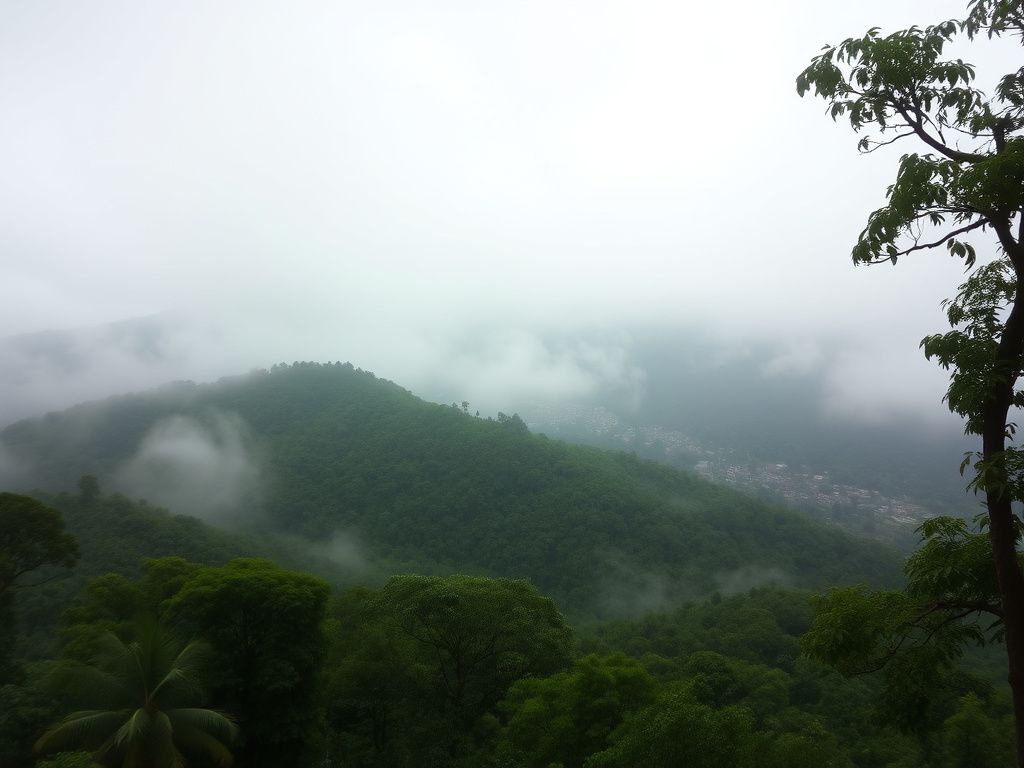
The monsoon season, running from June through September, brings a version of Tirumala that most pilgrims never see. The Seshachalam hills turn a deep, saturated green. Waterfalls appear on hillsides that are bare and brown for the rest of the year. The air is cool and carries mist that rolls in from the valleys, sometimes thickening to the point where you can barely see across the mada streets. For pilgrims who can manage the practical considerations, the monsoon offers one of the most distinctive and comparatively uncrowded pilgrimage experiences the hill provides across any season.
Table of Contents
The crowd advantage
The monsoon months typically see lower pilgrim volumes than the peak winter season (October-January), the summer school-holiday period, and major festivals. For planning purposes, this translates to:
- Shorter Sarva Darshan waits, sometimes significantly reduced from peak-day figures
- Easier availability of TTD accommodation on the hill
- A quieter, more contemplative atmosphere inside the temple complex
- More room in the mada streets and around the secondary shrines
The exception to this is late September, when the Salakatla Brahmotsavam typically falls (in 2026, the dates are 15-23 September). During that festival, crowd levels return to peak territory and accommodation on the hill fills well in advance. If your goal is a quiet monsoon visit, aim for June through the first half of September rather than the festival window.
Weather to expect on the hill
- Temperatures on Tirumala are cooler than in Tirupati city below, as the hill sits at around 853 metres above sea level
- Rainfall ranges from intermittent showers to heavy, sustained rain. Mist and low cloud are common, especially in the early morning and evening
- The ghat road and the footpath steps (both the Alipiri and Srivari Mettu routes) become slippery when wet
- Theerthams and waterfalls, particularly Aakasa Ganga, are at their fullest and most dramatic during this period
What to pack for a monsoon visit
Packing correctly removes most of the discomfort that rain can create on a pilgrimage. A few items make a significant difference:
- A compact folding umbrella and/or a rain poncho that covers you without being too bulky to carry through queues
- Quick-dry clothing in multiple layers; the hill is cool even when it is not raining
- Footwear with a firm grip for wet surfaces. Keep in mind that footwear is left outside the temple, so choose shoes that are easy to remove and leave without concern
- A waterproof pouch or dry bag for your phone, documents, and darshan booking tickets
- A small quick-dry towel
- Any personal medications
- A warm layer for the evening, when the hill can become quite cold by the standards of lowland Andhra Pradesh
Safety and practical precautions
- On the footpaths: Both the Alipiri steps and the Srivari Mettu route can become genuinely slippery during heavy rain. If the rain is heavy on the day of your walk, the APSRTC bus or a taxi to Tirumala is a safer choice than the footpath.
- On the ghat road by private vehicle: Visibility drops sharply in heavy mist. The APSRTC buses are driven by drivers who know the ghat road well and are a safer option in difficult conditions.
- Health: The cool, wet conditions can bring on colds and respiratory discomfort. Dress warmly, especially for the pre-dawn seva hours when temperatures drop further.
- Schedule buffer: Rain occasionally delays travel. Build additional time into your itinerary so that a delay on the ghat road does not cause you to miss a timed darshan booking.
Monsoon highlights
Several of Tirumala’s most significant natural and sacred sites are at their best during the monsoon. Aakasa Ganga, the sacred waterfall whose waters are used in the temple’s ritual bathing of the Lord, flows most strongly through July and August. Other theerthams around the hill are similarly full. The misty, green quality of the hills during this season gives the pilgrimage an atmosphere that is qualitatively different from any other time of year.
If you ask me, the early morning in monsoon Tirumala, when the mist is thick, the temple bells are ringing, and the queue is shorter than usual, is one of the most genuinely moving pilgrimage experiences available anywhere in South India.
To set expectations: the monsoon is not without its inconveniences. Wet shoes, damp clothes, occasional colds, and visibility-reducing mist on the ghat road are real factors. Some pilgrims find the rain disruptive to the experience of being in the queue for extended periods. If you prefer physical comfort to atmosphere, the October-November post-monsoon window gives you greener hills than the dry season with drier conditions than the rains.
Common questions
Is the monsoon a good time to visit Tirumala? Yes, particularly for pilgrims who want shorter queues and a distinctive atmosphere. You need to be prepared for rain, cool temperatures, and slippery paths. For official weather and travel advisories, check news.tirumala.org.
Are darshan waits shorter during monsoon? Generally yes, outside the Brahmotsavam festival period in September. Weekday monsoon visits outside festivals can see notably shorter Sarva Darshan waits than peak months.
Should I walk up the footpath during the monsoon? In moderate rain, many pilgrims do walk the Alipiri steps. In heavy or sustained rain, the surface becomes slippery and the APSRTC bus or taxi is the safer choice.
What is special to see in monsoon? Aakasa Ganga and the other theerthams are at their fullest, and the green, mist-covered hillscape provides an atmosphere unlike any other season. The visual experience of the mada streets in morning mist is particularly distinctive.
Is the temple ever closed due to rain? The temple maintains its full daily schedule in ordinary monsoon conditions. Only extreme weather events would affect temple operations. Check news.tirumala.org for any advisories before and during your trip.
When is Brahmotsavam in 2026? The Salakatla Brahmotsavam is 15-23 September 2026. Crowd levels during this period return to peak-season volumes, so book accommodation early if you plan to attend.
Is APSRTC running to Tirumala during monsoon? Yes. APSRTC maintains its regular service schedule to Tirumala through the monsoon season. For current schedules and fares, refer to apsrtconline.in.
Related reading
- Aakasa Ganga Theertham — Tirumala’s Sacred Waterfall
- Tirumala Festival Calendar 2026
- Tirupati to Tirumala by APSRTC Bus