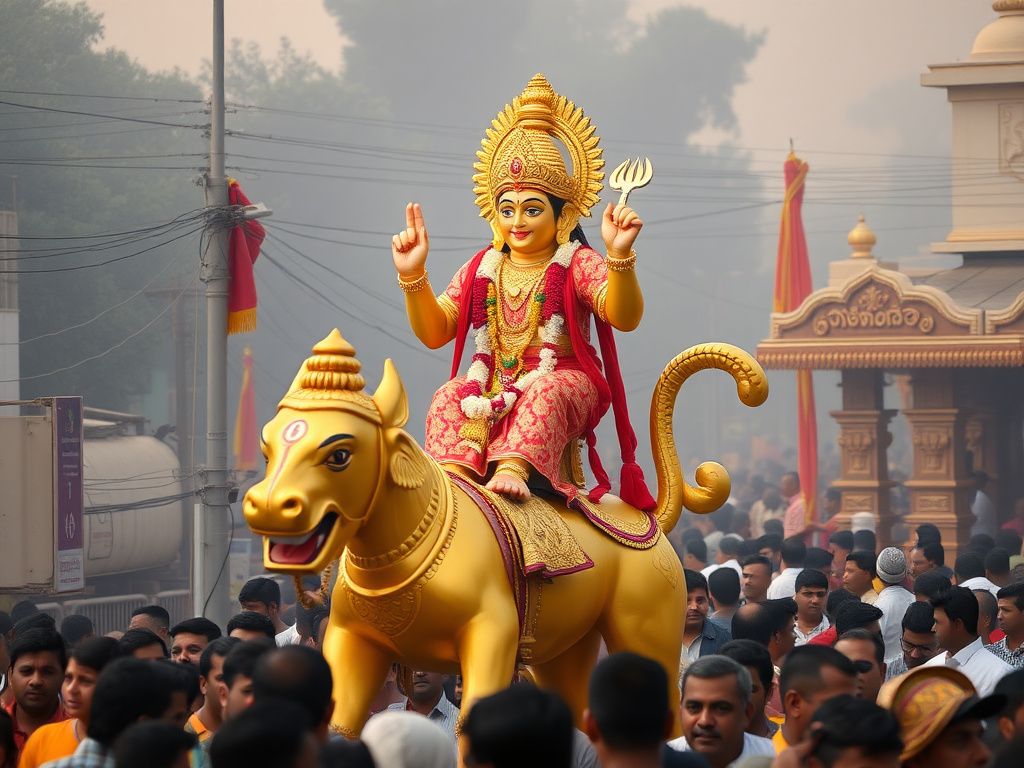
On the sixth day morning of Tirumala’s Brahmotsavam, Lord Malayappa Swamy emerges in procession carried on the Hanumantha Vahanam, with Lord Hanuman himself serving as the divine vehicle. Among the ten days of vahana sevas that constitute the Brahmotsavam, this is one of the most spiritually distinctive, precisely because the vehicle is not a bird, an animal, or a symbolic chariot, but a divine personality: the supreme devotee. The scene of Hanuman bearing his beloved Lord on his shoulders is an image of devotion turned inside out, and it has a way of staying with pilgrims long after the procession ends.
Table of Contents
The significance of Hanuman as vehicle
Most of the Brahmotsavam vahanas carry symbolic meaning through what they represent: the swan (Hamsa) stands for wisdom and discernment, the lion (Simha) for sovereignty and power, Garuda for speed, liberation, and the devoted carrier of Vishnu. What makes the Hanumantha Vahanam different is that the vehicle is a devotee, a conscious being who has chosen, across countless ages, to subordinate his own immense power to the Lord’s service.
- The ideal devotee: Hanuman embodies bhakti (devotion) and dasya bhava (the attitude of the servant). He is the standard against which all devotional aspiration is measured.
- Strength used only in service: Hanuman’s power is extraordinary, yet it is never exercised for his own benefit. Every display of it in the Ramayana is in the service of Lord Rama.
- Humility in greatness: Despite his status, Hanuman remains the vehicle, the carrier, the one who lifts the Lord. There is no greater honour in the devotional imagination.
- Continuity of devotion across avatars: Hanuman served Lord Rama, an avatar of Vishnu. By carrying Lord Venkateswara, his devotion crosses the boundary of a single divine form and becomes timeless.
Why this vahanam is different
The philosophical point being made through the Hanumantha Vahanam is direct: among all the forms the Lord’s vehicle can take, the highest is the surrendered devotee. This teaching resonates with the Vishishtadvaita framework of the temple’s Sri Vaishnava tradition, in which the aspiration of the soul is not absorption into the divine but intimate service of the divine.
For pilgrims watching the procession, this is an invitation to consider their own relationship with the Lord. The sight of Hanuman, capable of lifting mountains, choosing to be a vehicle, makes a quiet argument that selfless service is not a lesser path but the fullest expression of devotion.
Honestly, no other vahana in the Brahmotsavam sequence carries quite this quality of personal instruction for the watching pilgrim.
Place in the Brahmotsavam sequence
The Brahmotsavam proceeds through a sequence of vahana sevas, with different vehicles on each morning and evening. The Hanumantha Vahanam falls on the sixth day morning, which means it follows the devotionally climactic fifth day evening Garuda Vahanam. The Garuda Vahanam is considered the most auspicious vahana seva of the entire Brahmotsavam, so the sixth day morning has a particular quality of coming after a peak. The evening of the sixth day typically features the Swarna Ratham, the golden chariot procession with the Lord accompanied by Sridevi and Bhudevi.
Confirm the exact vahana schedule for any specific Brahmotsavam on news.tirumala.org, as the sequence and timings are published there in advance.
Sri Bedi Anjaneya Swamy Temple at Tirumala
Hanuman’s presence at Tirumala is not limited to the Brahmotsavam. The Sri Bedi Anjaneya Swamy Temple is located directly opposite the main Venkateswara temple. Bedi Anjaneya (Hanuman in chains) is a form unique to this location, where Hanuman is depicted restrained at the feet of the Lord, an expression of his boundless eagerness to serve, held in check only by the Lord’s grace. Pilgrims routinely visit this temple as part of the Tirumala circuit, and darshan of Bedi Anjaneya before or after the main temple darshan is a natural complement to the Hanumantha Vahanam’s devotional message.
How to witness the Hanumantha Vahanam
- The procession moves through the public mada streets around the main temple. No ticket is required; it is free for all pilgrims.
- This is a morning procession. Arrive early to find a good standing position along the route before the crowd builds.
- Premium viewing with a reserved position may be available through advance Arjitha Seva booking; check ttdsevaonline.com for availability well in advance of the Brahmotsavam dates.
- The procession involves the Lord being carried in the decorated vahanam with full ritual accompaniment: Vedic chanting, instruments, and the light of torches or lamps depending on the time.
One thing to keep in mind: because the Brahmotsavam draws very large crowds, accommodation on the hill fills rapidly for the entire festival period. If you are planning to attend the sixth-day vahana sevas specifically, book lodging several weeks or months in advance and confirm the festival dates for the year you intend to travel.
Common questions
Why is Hanuman chosen as a vehicle? Hanuman is the supreme devotee in the tradition. Carrying the Lord expresses the highest ideal of selfless devotional service: the bhakta as the vehicle of the beloved.
Which day is the Hanumantha Vahanam? The sixth day morning of the Brahmotsavam festival. The exact calendar dates vary by year; confirm on news.tirumala.org before planning your visit.
What happens on Day 6 evening? The Swarna Ratham, the golden chariot procession, with the Lord accompanied by his consorts Sridevi and Bhudevi.
Is there a Hanuman temple at Tirumala? Yes. Sri Bedi Anjaneya Swamy Temple is located opposite the main Venkateswara temple and is an integral part of the Tirumala pilgrimage for most devotees.
Do I need a ticket to watch the procession? No. The vahana sevas proceed through the public mada streets and are open to all pilgrims without charge. Premium reserved viewing may require separate Arjitha Seva booking.
What is the relationship between Garuda Vahanam and Hanumantha Vahanam? The Garuda Vahanam on Day 5 evening is considered the pinnacle of the Brahmotsavam in terms of auspiciousness. The Hanumantha Vahanam on Day 6 morning carries a different quality: less about cosmic auspiciousness and more about the teaching of devotional service.
Related reading
- Garuda Vahanam — Day 5 of Brahmotsavam
- Simha Vahanam — Day 3 of Brahmotsavam
- Sri Bedi Anjaneya Swamy Temple Tirumala
- Tirumala Festival Calendar 2026